
One URL, Every Device: Walking Through a Real Place in AR
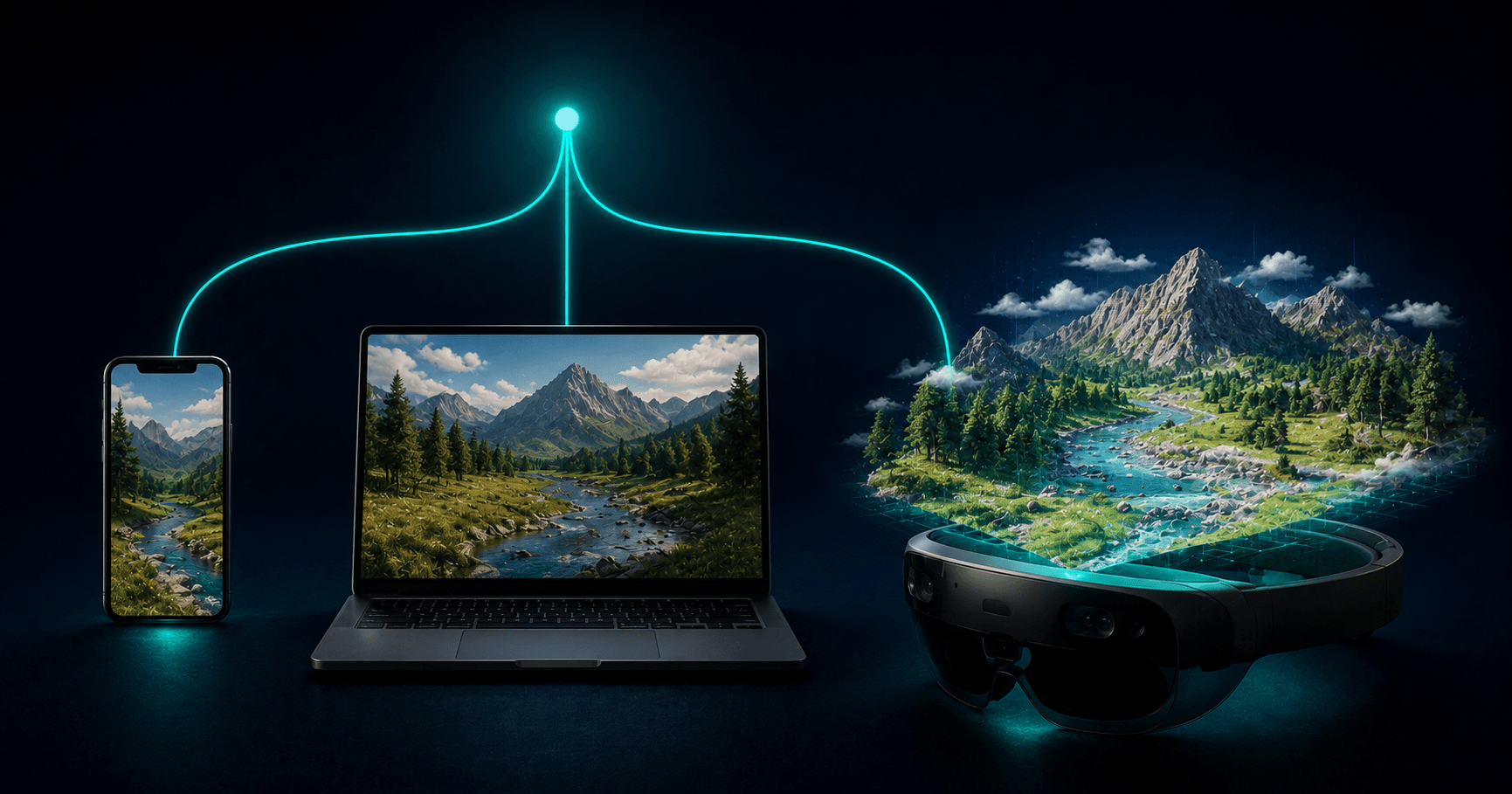
We capture real places as 3D models you can fly through in a browser — and the same link opens on a phone, a laptop, or inside an AR headset. One URL, every device.
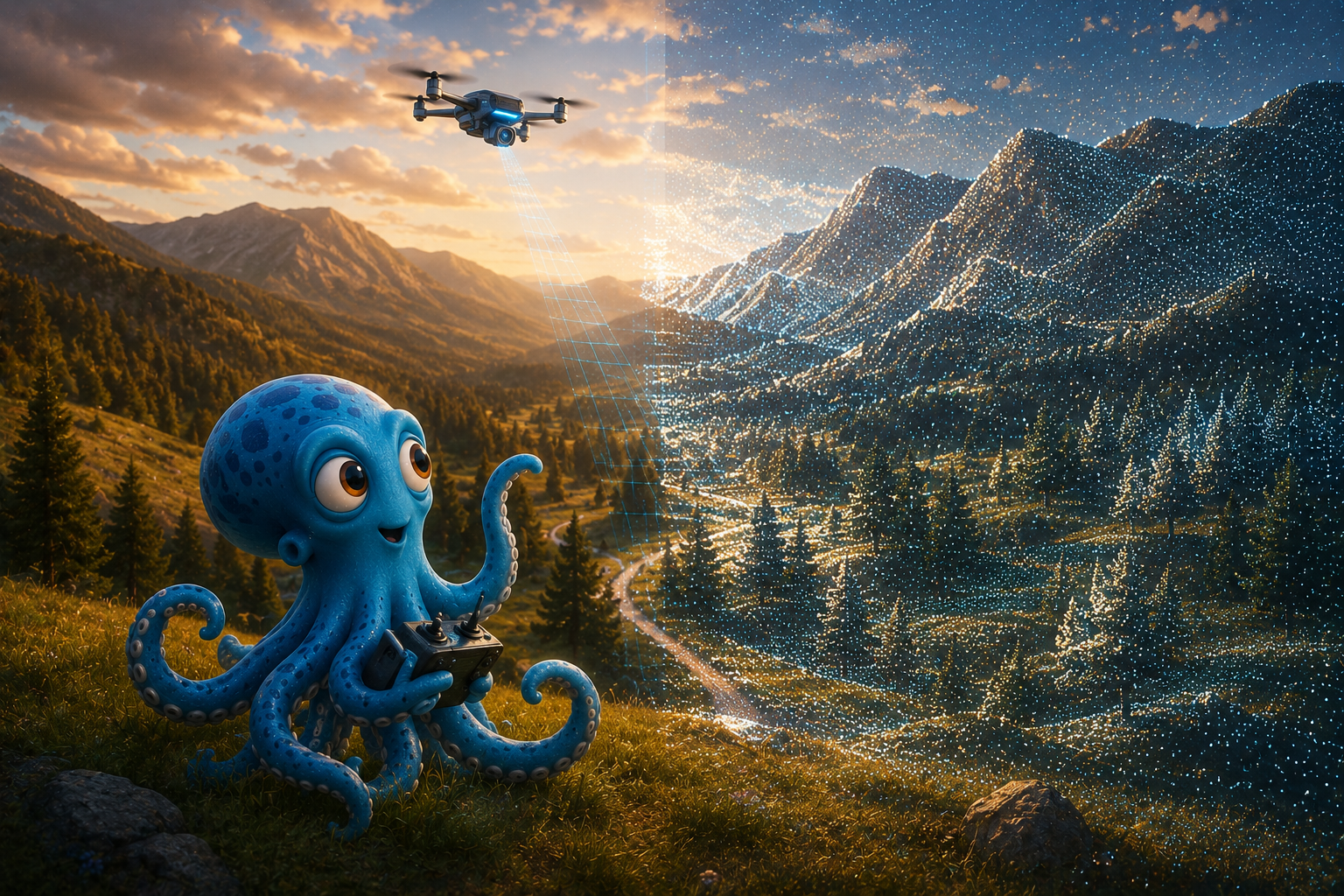
At Blue Octopus Technology, we capture real places in 3D. Fly an aircraft over a property or walk a camera around a site, run the footage through some software, and the result is a photo-realistic model you can move through in a web browser — no special app, just a link.
The capture is the impressive-sounding part. But the part that actually changes the business math is duller and bigger: the same link works on everything. Open it on your phone and you swipe around the place with your thumb. Open it on a laptop and you fly through with the mouse. Put on an AR headset and open the same link, and you're standing in the place, turning your head to look around it in three dimensions.
One address. Every device. Nothing to build twice.
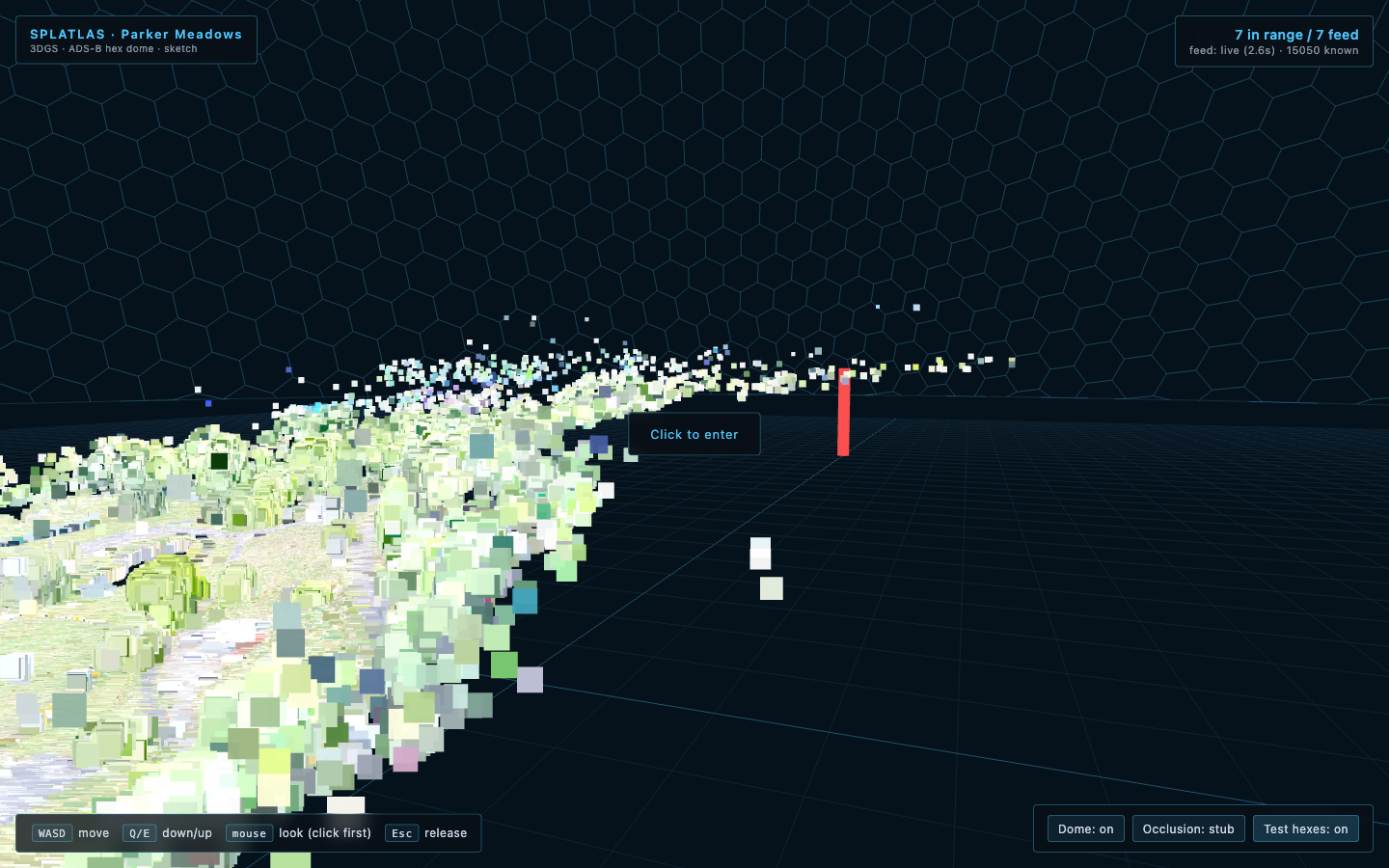
That's our viewer, showing a place we captured. It's running in a web browser in that screenshot. It runs in exactly the same web browser inside a headset.
Why "it's just a web page" is the whole point
To understand why this matters, you have to know what the old way costs.
Traditionally, if you wanted a 3D experience that ran on an iPhone and an Android phone and a desktop and a VR headset, you built it four times — or close to it. Each platform has its own rules, its own app store, its own way of doing things. That's four times the work, four things to maintain, and a long wait before anyone sees anything. It's why immersive 3D was a big-budget, big-company thing.
The shift is that the web grew up enough to do 3D — including in headsets. Modern AR and VR headsets, like Apple's Vision Pro and Meta's Quest, can open a web page and step into 3D content on that page. So if your 3D experience is a web page, you don't build it four times. You build it once, host it at one address, and every device that has a browser can open it. The phone gets a flat-screen version, the headset gets a walk-around-inside version, and it's the same link doing both.
You capture the place once. The viewing is free across every device, because it's just the web.
What this is actually good for
This isn't a tech demo looking for a use. It's a deliverable, and the list of who wants it is long:
- Real estate. A listing where the buyer can fly through the property from their couch on a phone — or step inside it in a headset if they have one — from one link in the email.
- Venues and event spaces. Let a client walk the space remotely before they book it.
- Job sites and industrial facilities. Capture the state of a site on a given day and let people who can't travel there inspect it in 3D.
- Anything you'd otherwise photograph. A set of photos shows you angles someone chose. A walkable 3D capture lets the viewer choose their own.
In every case, the thing you hand the client is a link. They open it on whatever they have. If they own a headset, the experience gets richer automatically, with no extra work from you. That "automatically richer on better hardware, still works on a phone" property is rare and valuable.
The honest caveats
We don't oversell this, so here's the straight version.
Viewing rich 3D inside a headset through a web browser is genuinely new, and "new" means rough edges. Performance depends on the headset and the size of the scene. The very smoothest experiences still come from purpose-built native apps, and a heavy scene can stutter on lighter hardware. What you see in the screenshot above is an early build of our own viewer — the capture-and-render side is improving faster than we can write about it, but it's a moving target, not a finished product.
So the realistic pitch isn't "flawless holographic walkthroughs today." It's this: the cost of making a 3D place viewable on every device, including AR, has collapsed — from a four-platform engineering project to a single web link — and the experience gets better on its own as the headsets and the web both improve. You're not betting on a gimmick. You're getting on the right side of a cost curve that only bends one way.
The capture is still craft. The distribution is now free. For anyone whose work involves showing people a place they can't easily visit, that's the combination worth paying attention to — one URL, and it meets every viewer on whatever they're holding.
Keep reading
More from the field.
Stay Connected
Get practical insights on using AI and automation to grow your business. No fluff.