
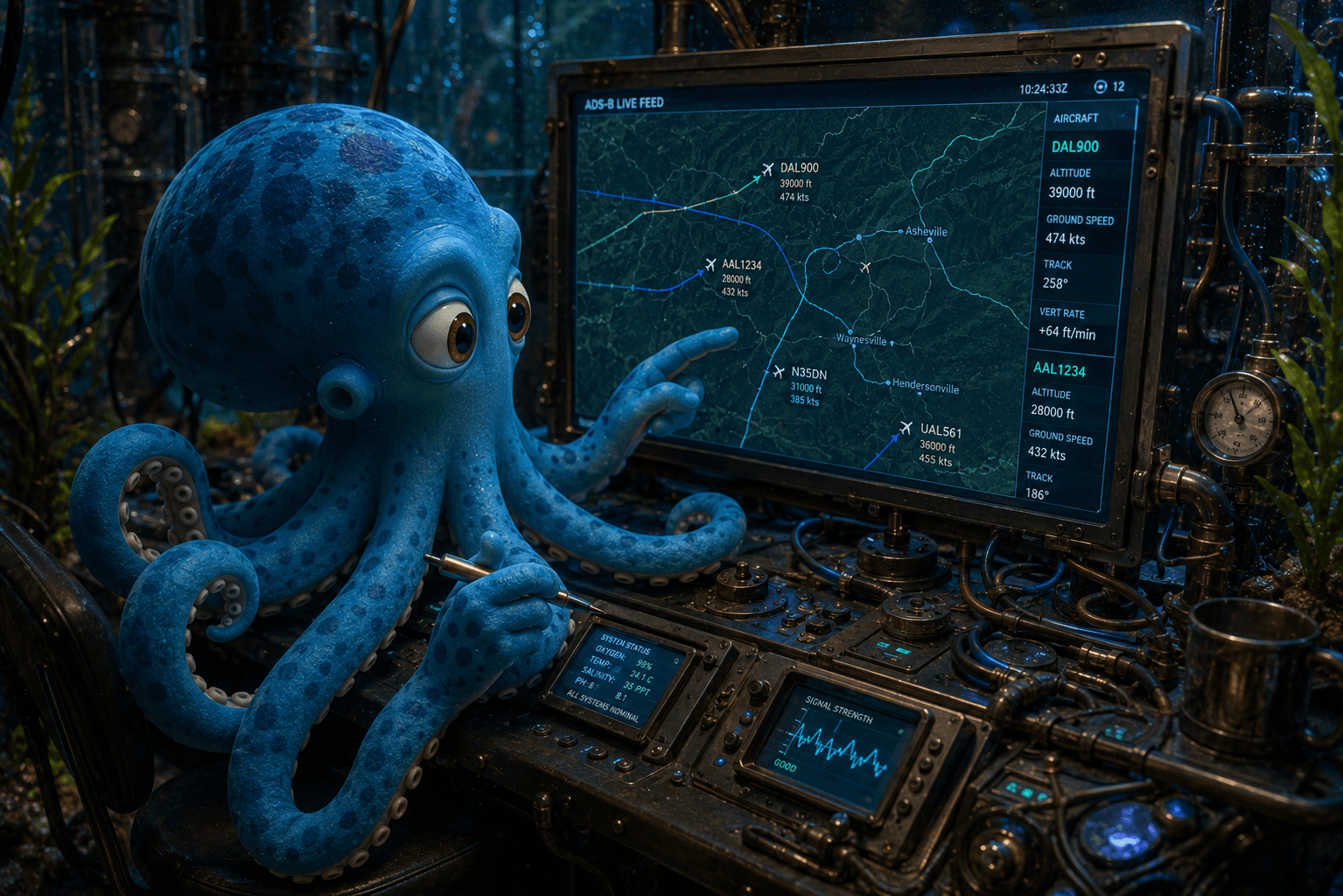
Live aircraft tracking
Watching real ADS-B feeds. Live aircraft positions over Western North Carolina, callsigns and altitudes scrolling.
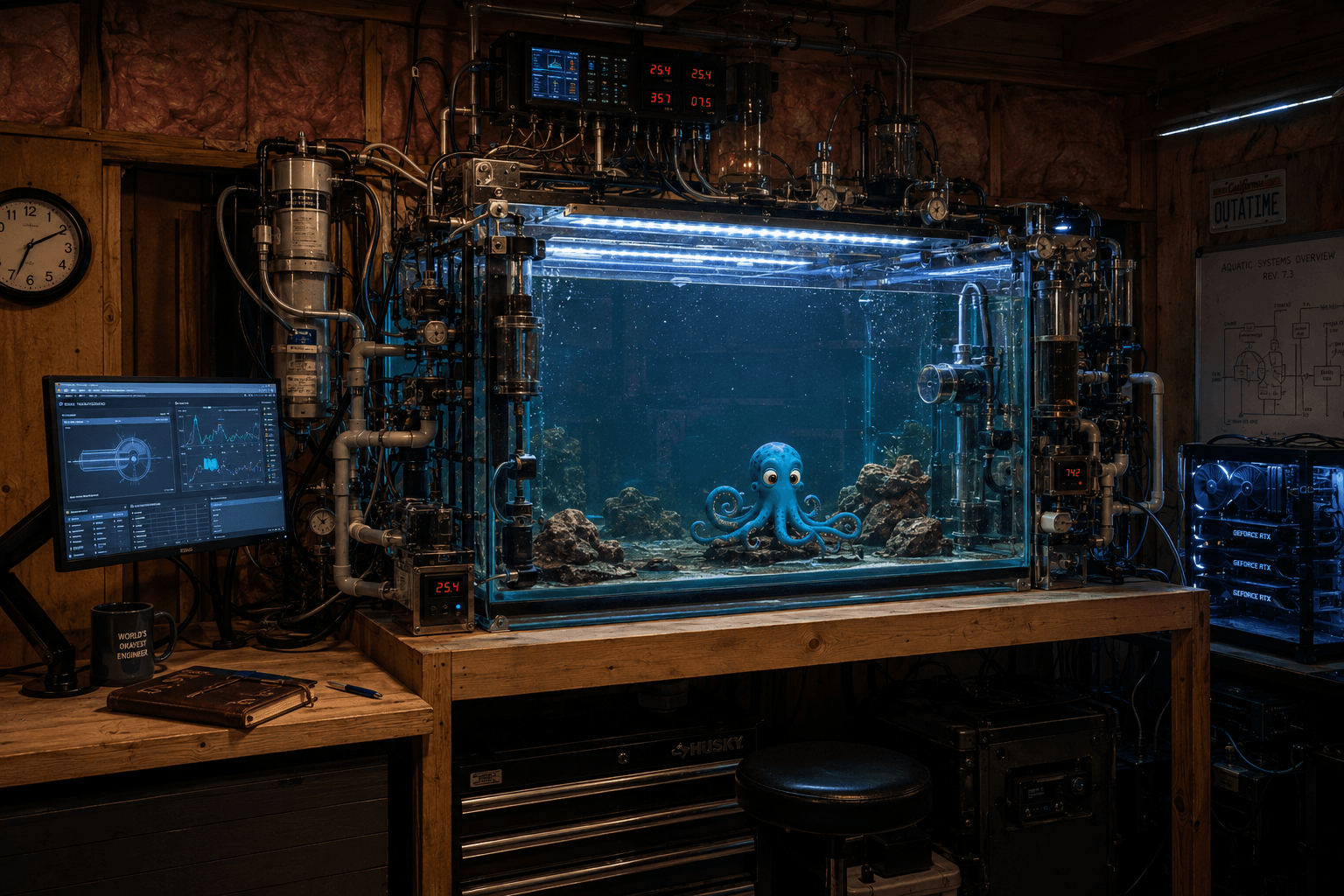
He runs the operation. He lives in the tank in the corner of the garage. The tank gets better as the work gets better.
The workshop
Blue Octopus Technology is a garage in Western North Carolina. The octopus lives in a hacked-together aquarium in the corner. People bring him problems; he gets them through. Sometimes what he builds along the way ends up being useful to other people too — that's where the products came from. The tank's getting better.
What he's working on
Octo's tank runs the same operation we do — live aircraft tracking, drone telemetry, computer vision, AI in the terminal. The work in the tank looks like the work on our screens. He's the in-character version of the real operation.
Watching real ADS-B feeds. Live aircraft positions over Western North Carolina, callsigns and altitudes scrolling.
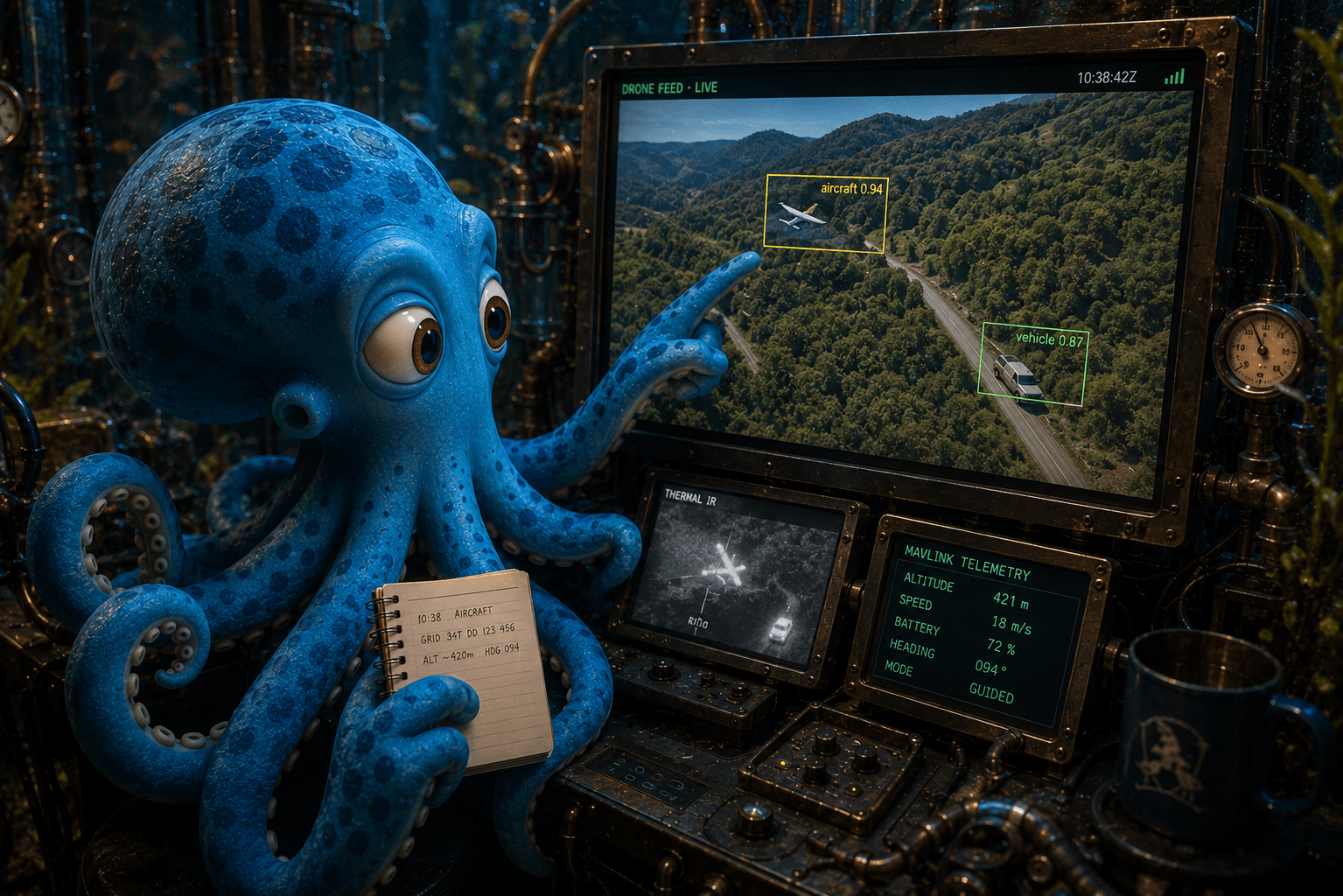
Reviewing drone feeds with object-detection bounding boxes and live MAVLink telemetry — the work behind the UAV identification rig.
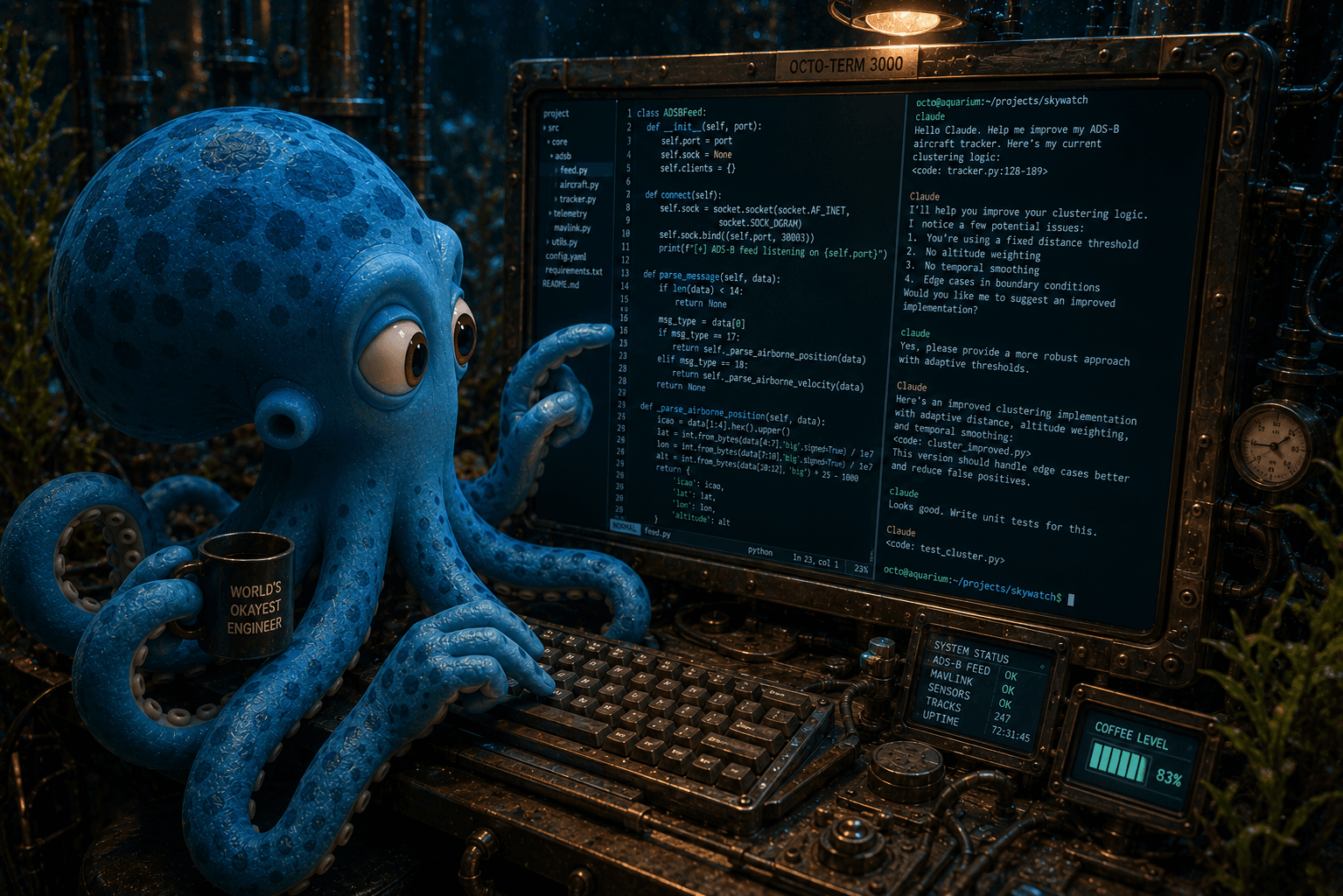
Building with AI in the loop. Code editor on the left, AI chat on the right. The mug says “WORLD’S OKAYEST ENGINEER.” He laughs at it.
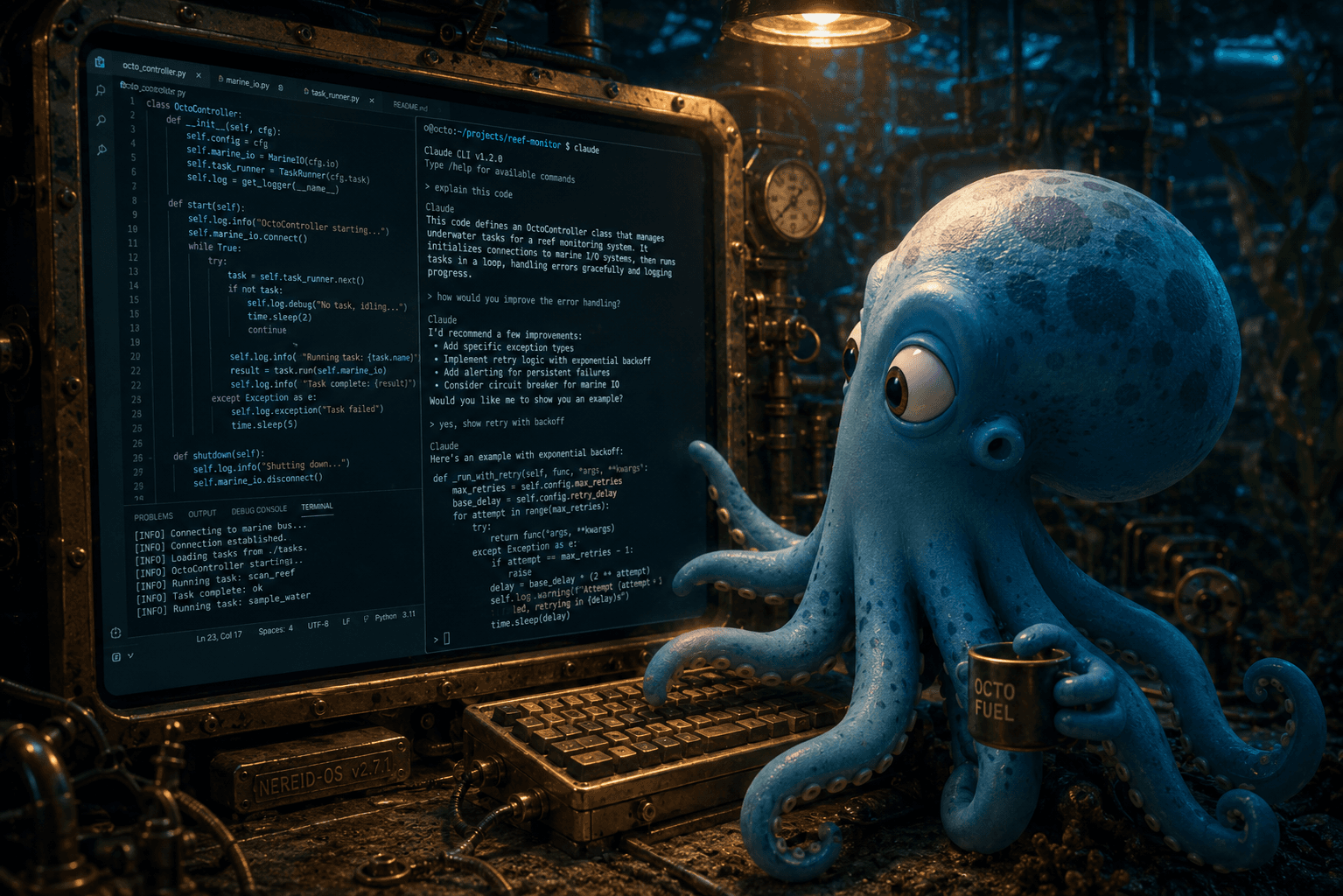
Long hours, brass-lamp light, the “OCTO FUEL” mug topped off, the build coming together one function at a time.
States
Real biology. Six states cover most of his weeks. The state of the octopus is the state of the operation.

Calm
Listening. Tell him more.

Focused
Heads-down on a build. Do not disturb.
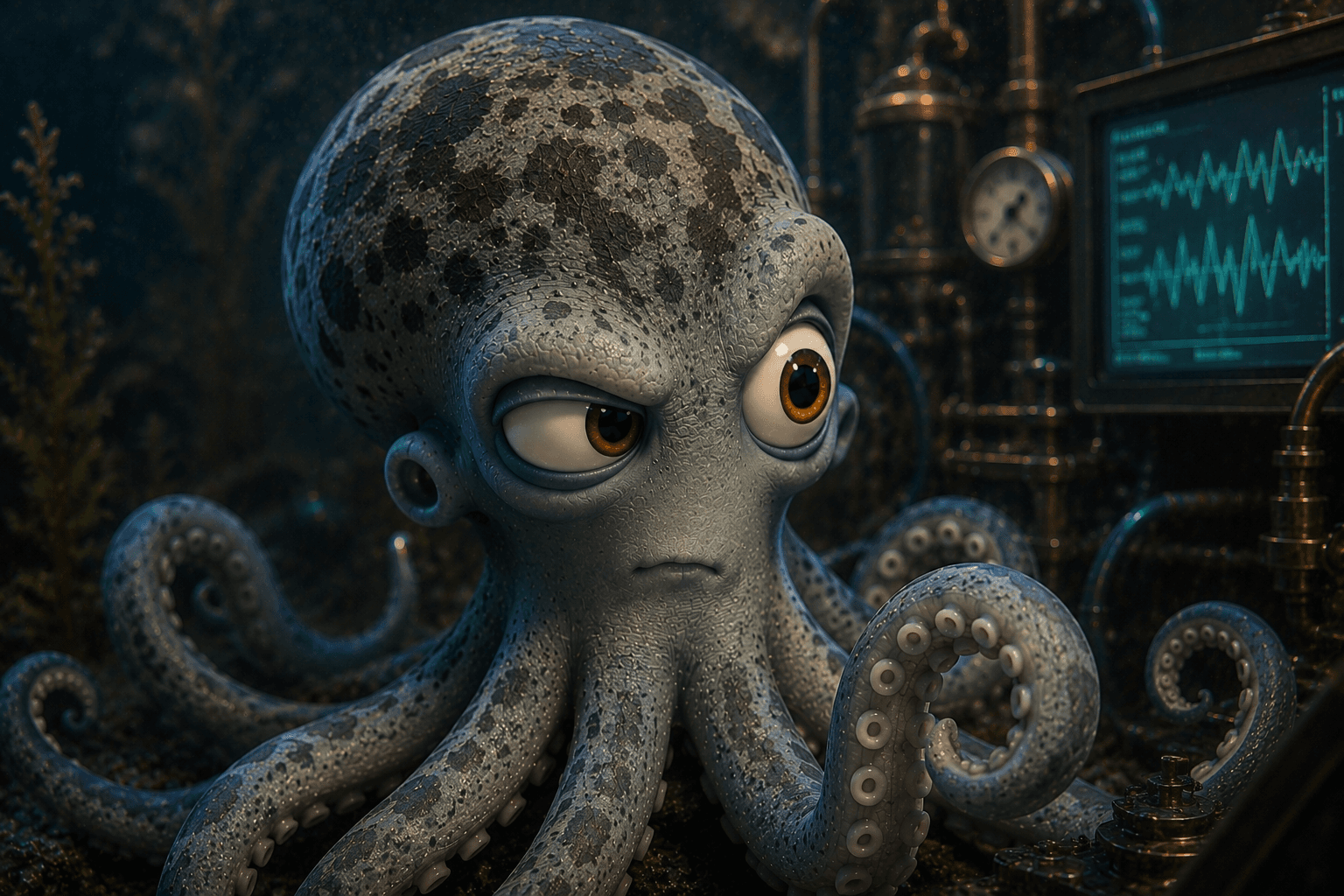
Suspicious
Something looks off. He's not buying it.

Delighted
A build just shipped. Tests passed.
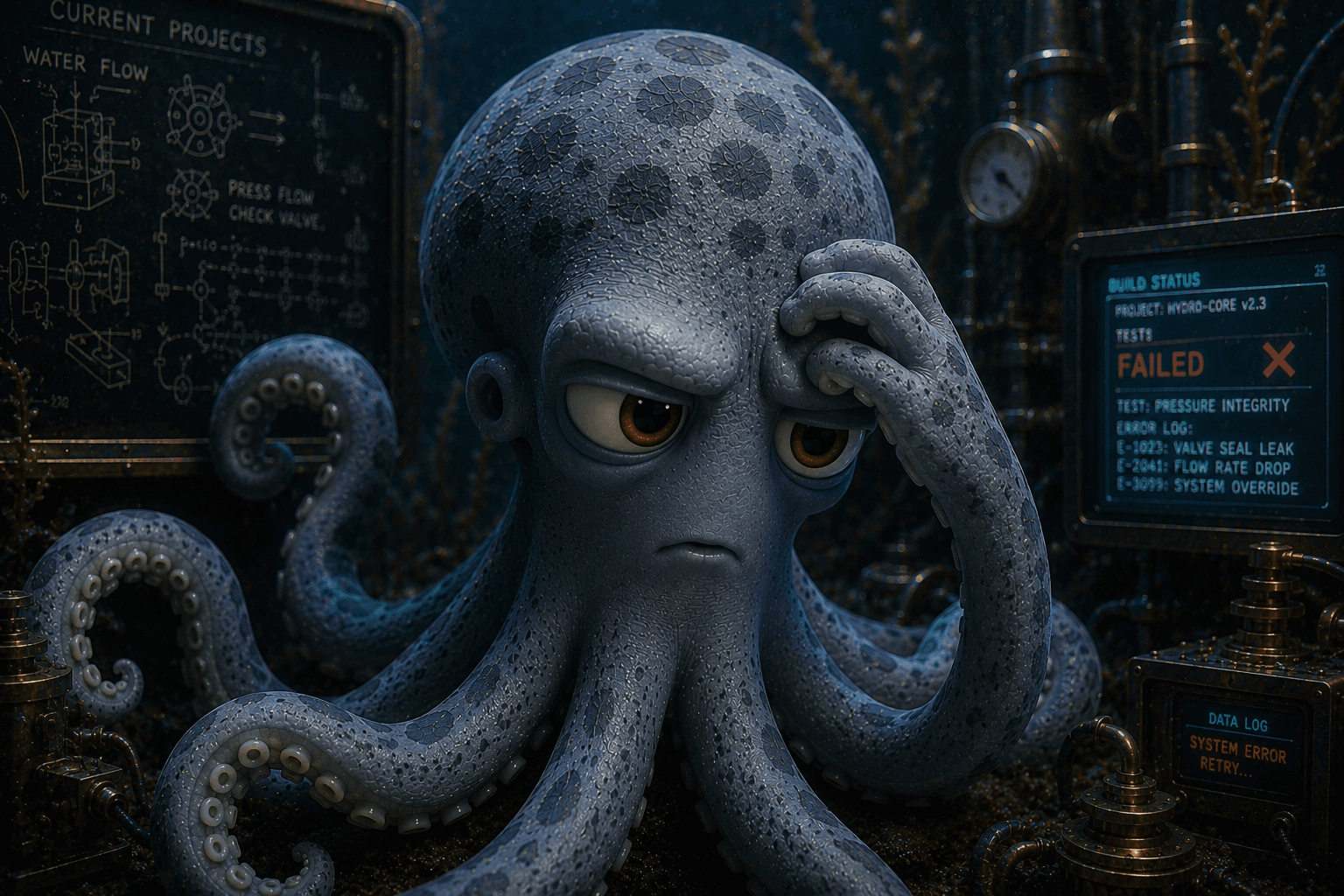
Annoyed
Something broke. Working on it.
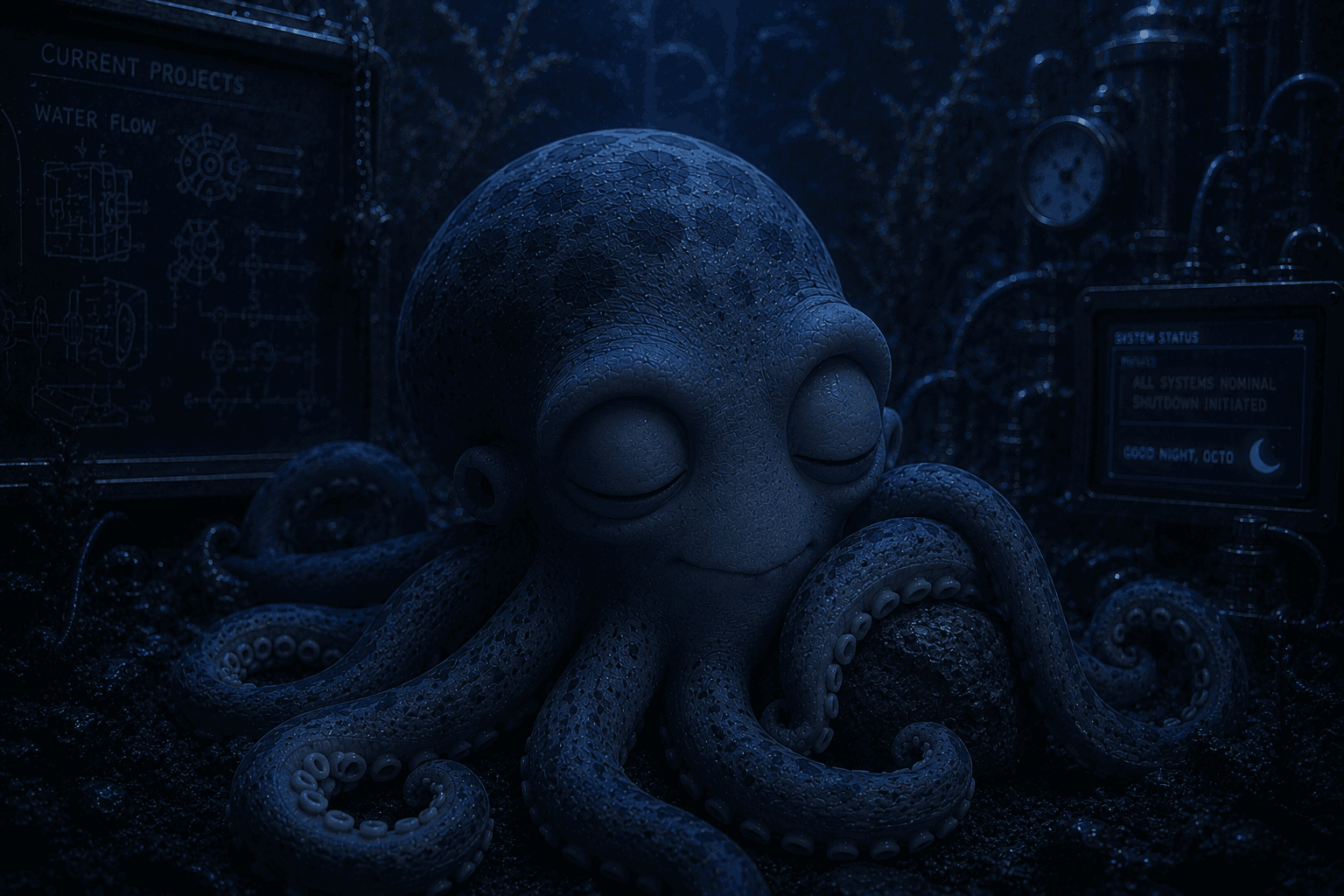
Off the clock
End of day. See you tomorrow.
How he got here
He was pulled out of the Pacific by a fisherman who didn't know what to do with him. He spent six months sleeping in the bilge, learned the radio, jumped ship in Mobile, and walked north.
He picked the mountains because the water sounded honest. He's been here long enough that the people who deliver propane don't notice him anymore.
Bring a problem worth solving. He'll listen, sketch something in the field journal, and let you know if it's a fit. If it's not, he'll tell you why.