
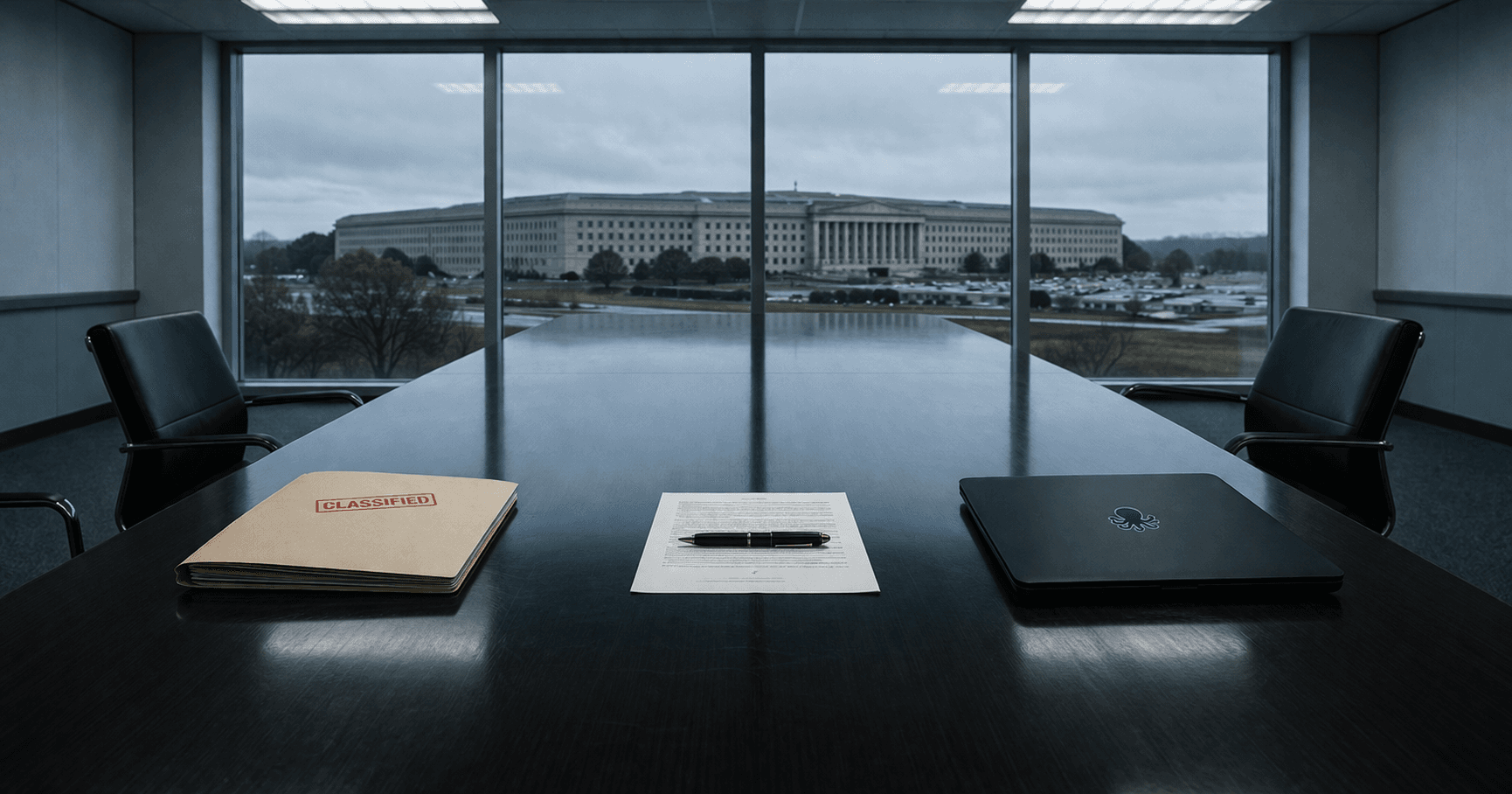
The AI Company That Said No to the Pentagon
Anthropic refused to change its AI safety guardrails for the Pentagon — and got blacklisted for it. Here's what happened and what it means for businesses that use AI tools.
On March 3, 2026, the Pentagon designated Anthropic — the company behind Claude, one of the most widely used AI systems in the world — as a national security supply chain risk.
The reason? A disagreement over safety guardrails. Anthropic builds restrictions into Claude that limit certain uses. The Pentagon wanted those restrictions changed. Anthropic declined. Things escalated fast.
Whatever you think about either side's position, this situation matters for every business that uses AI tools — because it reveals how quickly the ground can shift under a technology provider. We explored how to evaluate AI vendors without getting burned, and this is exactly the kind of risk that evaluation should account for.
What Actually Happened
Anthropic had been negotiating with the Department of Defense to deploy Claude on GenAI.mil, the military's AI platform. According to court filings, the two sides were "nearly aligned" as recently as late February.
Then talks broke down. A Truth Social post from the President ordered federal agencies to "immediately cease" all use of Anthropic's technology. Defense Secretary Hegseth followed up by barring any contractor doing business with the military from commercial activity with Anthropic.
The implications are wide. Defense contractors like Amazon, Microsoft, and Palantir — all major Anthropic partners — would need to certify that they don't use Claude in any military work. Anthropic filed suit on March 9. A federal judge heard arguments on March 24 and questioned whether the DOD violated the law.
Palantir's CEO said publicly that they're still using Claude despite the blacklist. The case is ongoing.
What This Means for Businesses
This story isn't just about defense contracts. It highlights a risk that most businesses haven't thought about: what happens when the company behind your AI tools gets into a fight with the government?
If you built your customer service system on Claude, your workflows on Claude, your internal tools on Claude — and tomorrow the government pressured your industry to stop using Anthropic products — what would you do?
That's not a hypothetical anymore. Defense contractors are facing exactly this question right now.
The Vendor Dependency Problem
Most businesses choose an AI provider and build around it. That's natural — switching costs are real, and you can't evaluate every alternative every quarter. But the Anthropic situation shows what concentrated dependency looks like when things go sideways.
The practical takeaway isn't "avoid Anthropic" or "avoid any specific provider." It's: understand how dependent your business is on any single AI vendor, and have at least a rough plan for what happens if that vendor becomes unavailable.
Some questions worth asking:
- Could your critical workflows run on a different AI provider with reasonable effort? As we covered in The Local-First AI Stack Is Here, some businesses are already running AI on their own hardware to avoid exactly this kind of dependency.
- Is your data portable, or locked into one vendor's format?
- Do you have the technical ability to switch, or would you need to rebuild from scratch?
These are the same questions businesses have been asking about cloud providers for years. AI tools are no different.
The Bigger Picture
The AI industry is navigating questions that don't have settled answers yet. What should AI tools be allowed to do? Who decides? What happens when a company's product philosophy conflicts with a government's requirements?
Different people will land in different places on those questions. But regardless of where you stand, the fact that a major AI provider can be blacklisted by the government in a matter of days is information worth having.
For businesses choosing AI tools, the calculus just got more complicated. It's no longer just about features, price, and performance. It's also about the political and regulatory landscape surrounding the company behind the tool.
That's a new variable. And it's one that isn't going away.
Related: How to Secure Your AI Agents Before They Become a Liability and Who Watches the AI? The Rise of Agent Governance.
Stay Connected
Get practical insights on using AI and automation to grow your business. No fluff.