
The Federal Database Shutdown Nobody's Talking About
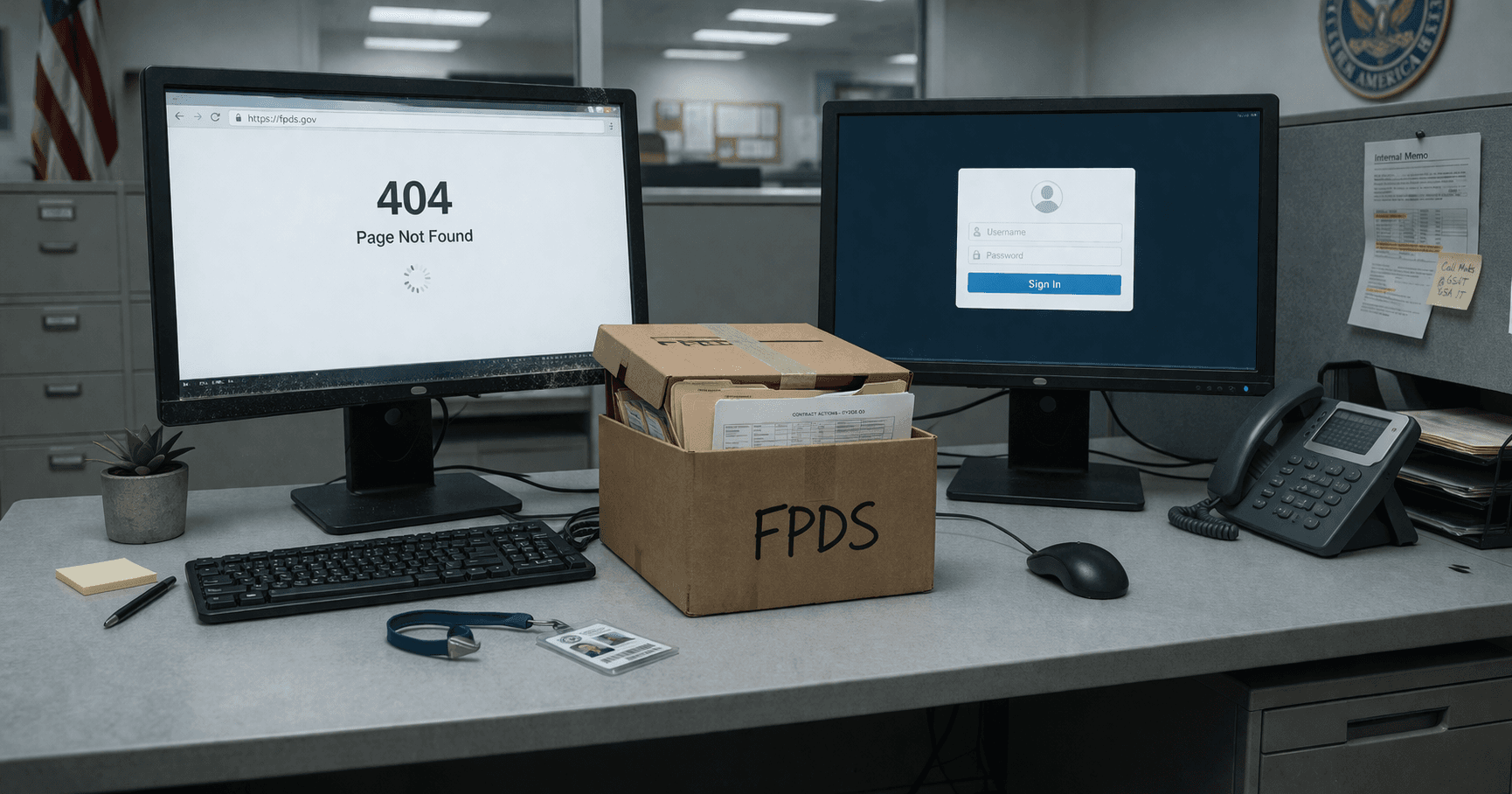
FPDS.gov — the public database that let anyone look up federal contract awards — was shut down on February 24. The data moved behind a login wall on SAM.gov, and the tools contractors relied on disappeared overnight.
If you've ever wanted to know which company won a government contract, how much they were paid, or which agencies are spending money in your industry, you used to be able to look it up on FPDS.gov. Federal Procurement Data System. Free. Public. Searchable.
On February 24, 2026, FPDS.gov was shut down.
The data didn't vanish — it moved to SAM.gov, the federal government's consolidated procurement platform. But the tools contractors relied on disappeared. The interface changed. And now you need a login to access information that used to be open to anyone with a browser.
What FPDS Was and Why It Mattered
FPDS was the public record of how the federal government spends money on contracts. Every agency. Every award. Every vendor. Going back decades.
Small businesses used it to research competitors — who's winning contracts in your space, how much they're getting paid, which agencies are buying what you sell. It's the same kind of public data assembly pattern we described in How We Built a Business Directory Using AI — public records, structured intelligently. Government contractors used it to identify trends, plan bids, and evaluate whether a contract was worth pursuing.
It wasn't glamorous. The interface looked like it was built in 2004 (because it was). But the data was invaluable for anyone trying to do business with the government.
What Changed
SAM.gov already handled contractor registration, opportunity listings, and entity management. Adding contract award data from FPDS was part of a broader consolidation effort — one system instead of several.
In theory, that makes sense. In practice, three things happened that affected how people access the data:
The interface changed. FPDS had a search interface that government contractors had learned over years. SAM.gov has a different layout, different search logic, and different export formats. Workflows that contractors had built around FPDS broke.
Access now requires a login. FPDS was openly searchable. SAM.gov requires an account for detailed contract data. For casual research — a small business owner wondering "who's getting contracts in my industry?" — that's a barrier that didn't exist before.
Third-party tools broke. A cottage industry of tools and services had been built on top of FPDS data. Analysts, consultants, and software products that relied on FPDS APIs or data exports need to rebuild around SAM.gov's systems.
Why Small Businesses Should Care
The federal government is the single largest buyer of goods and services in the United States. In fiscal year 2025, it awarded over $750 billion in contracts. A meaningful share of that — about 25% by mandate — is supposed to go to small businesses.
But finding and winning those contracts requires intelligence. You need to know which agencies buy what you sell, who your competitors are, what the typical contract size looks like, and when opportunities come up.
FPDS was the free tool for that research. With it behind a different interface and login wall, the barrier to entry for small businesses just got a little higher.
Meanwhile, AI-powered government contracting tools are filling the gap. Platforms like GovDash, SamSearch, and Sweetspot use AI to match businesses with relevant opportunities, analyze competitor win patterns, and automate parts of the proposal process. Some of these report significantly better results than manual SAM.gov searching.
What to Do
If you're a small business that does or wants to do government work:
Create a SAM.gov account if you don't have one. Registration is free but takes time. If you already have a DUNS number or UEI, the process is simpler.
Learn the new interface. The data is still there — it's just organized differently. SAM.gov has guides for contractors migrating from FPDS.
Consider whether AI tools are worth the investment. The government contracting AI tool market is growing fast. Some are free for basic searches. Others charge for advanced matching and analysis. Whether the cost makes sense depends on how much government business you're pursuing.
Don't ignore government contracts because the process seems complicated. AI tools can help with the research and matching, as we covered in AI for Small Business: Practical Uses That Actually Save Money. The barrier to entry keeps a lot of competitors out. For businesses with the patience to navigate it, federal contracting is one of the most stable revenue sources available.
The database isn't gone. But the easy, public version of it is. For small businesses, that means a little more work to access the same information. For the AI tool market, it means a lot of new customers looking for help.
Related: AI for Small Business: Practical Uses That Actually Save Money and How We Built a Business Directory Using AI.
Keep reading
More from the field.
Stay Connected
Get practical insights on using AI and automation to grow your business. No fluff.