
AI Outreach Without the Spam: Guardrails for Real Outbound
AI can send hundreds of personalized emails — or 'Hi {FIRST_NAME}' garbage. The difference: real guardrails and the right data. What actually works in 2026.
Cold outreach has always had a reputation problem. And honestly, it earned it. For years, the playbook looked the same: buy a list, write one generic template, swap in {FIRST_NAME} and {COMPANY_NAME}, blast it to a few thousand people, and hope for the best. Maybe one or two percent would respond. The rest would delete it, mark it as spam, or silently lose a little respect for your brand.
That era is ending. Not because cold outreach is dead — it isn't — but because a new approach is making the old way look embarrassing by comparison. And it's powered by AI.
What's Actually Changed
Here's the shift in plain terms: AI models have gotten good enough to research a company, understand what they do, and write a genuinely personalized email about it. Not "personalized" in the mail-merge sense where your name is plugged into a template. Actually personalized — as in, the email references something specific about your business that only someone who looked at your website would know.
This isn't theoretical. Right now, business owners and sales teams are using AI to generate hundreds of unique, individually tailored outreach emails in the time it used to take to write five. The results they're reporting are dramatically better than traditional cold email — higher open rates, higher response rates, and far fewer spam complaints.
The reason is simple. When someone receives an email that clearly references their specific situation, they read it. When they receive a template with their name pasted in, they delete it.
How It Actually Works
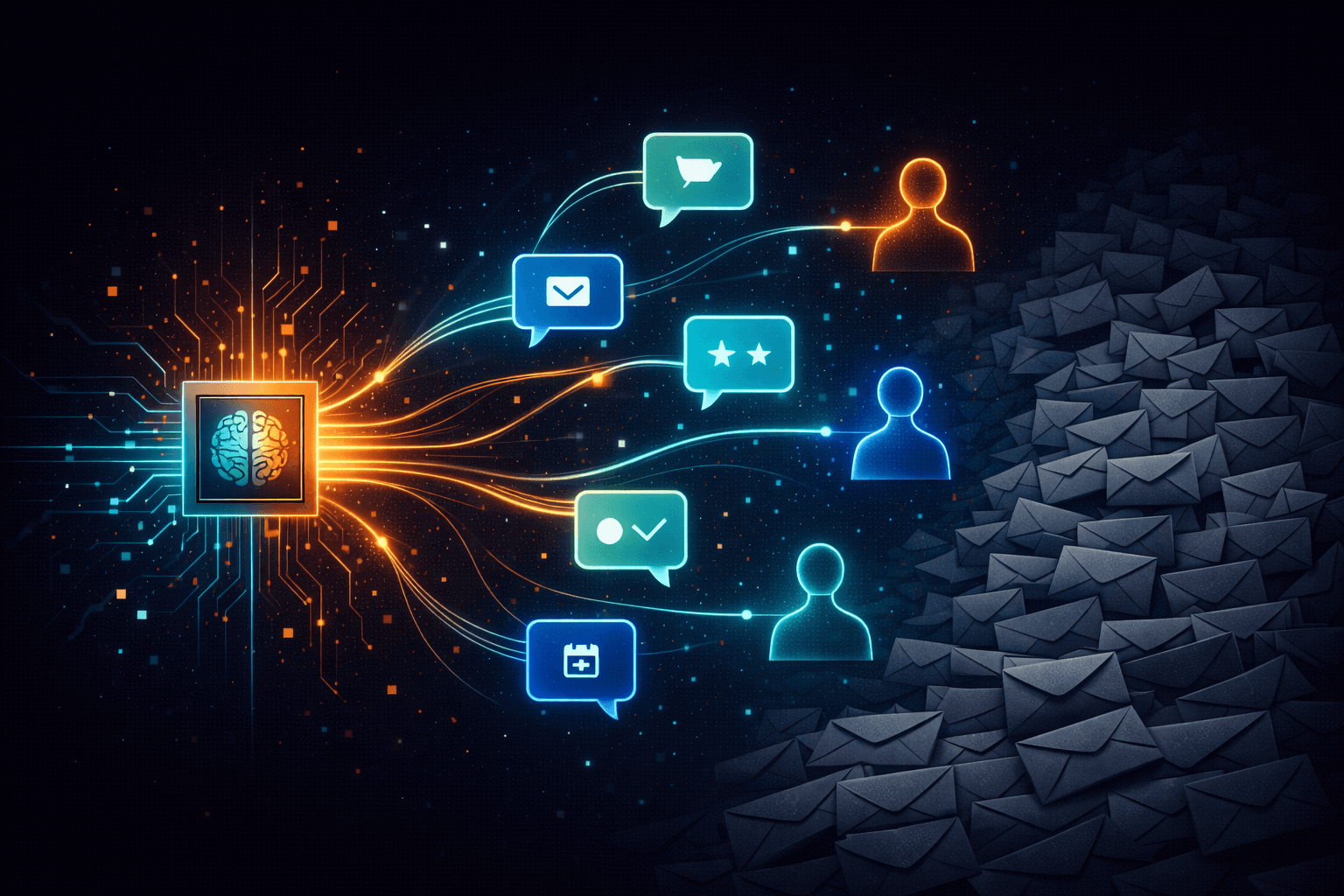
The process is less complicated than you might expect. Here's what a typical AI-powered outreach workflow looks like:
1. Start With a Target List
You put together a list of the companies or people you want to reach. This might come from a CRM, a LinkedIn search, an industry directory, or a list you've built over time. Quality matters here — a focused list of 200 well-chosen prospects will outperform a random list of 5,000 every time.
2. AI Researches Each Prospect
This is the step that changes everything. The AI visits each prospect's website, reads their about page, looks at their services, and builds an understanding of what the company does, who they serve, and what challenges they might be facing. Some setups also pull in recent news, job postings, or social media activity for additional context.
3. AI Writes a Unique Email for Each One
Using what it learned, the AI drafts an email for each prospect. Not a template with blanks filled in — a completely unique message that references specific things about that company. The tone, the opening line, the value proposition, and the call to action are all tailored to the recipient.
4. You Review and Send
You review the drafts, make any edits you want, and send them. Some people review every email individually. Others spot-check a batch and send the rest. Either way, you stay in control of what goes out under your name.
The entire process — from a list of 200 prospects to 200 ready-to-send personalized emails — can take less than an hour. Doing that manually would take a team of people several days.
Why It Works (and Why It's Not Spam)
There's a world of difference between these two emails:
The old way: "Dear Business Owner, we help companies like yours grow with our innovative solutions. I'd love to schedule a call to discuss how we can help. Are you available this week?"
The new way: "I noticed your dental practice in Austin just expanded to a second location — congratulations. We've helped similar multi-location practices streamline patient intake so the new office can hit the ground running without doubling the admin work. Would it be worth a 15-minute conversation?"
The first email is spam. Everyone who receives it knows it was sent to a thousand other people. The second email demonstrates that someone — or something — actually looked at their business and has something relevant to say.
That's the key distinction. Genuine personalization is not spam. It's how good business development has always worked. AI just makes it possible to do at scale what used to require a dedicated business development person spending hours researching each prospect by hand.

Where This Applies
This approach works across a wide range of industries. Here are a few examples of how different businesses are putting it to use:
Real estate agents reaching out to homeowners in specific neighborhoods with relevant market data about recent sales and property values in their area. Instead of a generic "thinking of selling?" postcard, the message references their actual street, recent comparable sales, and current market conditions.
Law firms doing business development by reaching out to companies that might need their specific expertise. A firm specializing in employment law, for example, might target companies that recently posted multiple job openings — a sign they're growing and may need help with employment agreements, compliance, or HR policies.
Home service companies targeting property management firms with outreach that references the specific properties they manage, the services they might need seasonally, and the challenges of maintaining a large portfolio.
Accounting firms reaching out before tax season to businesses that might benefit from switching providers, with messages that reference the specific industry they're in and the tax considerations that come with it.
Consultancies — like ours — reaching potential clients with outreach that references their specific technology stack, recent growth, or operational challenges visible from their public presence.
In every case, the outreach works because it's relevant. The recipient can tell that someone took the time to understand their situation before reaching out.
The Ethical Line
Let's be direct about this: there is a right way and a wrong way to use AI for outreach, and the line between them matters.
The right way:
- Each email is genuinely personalized based on real research about the recipient's business
- The message offers something relevant to their specific situation
- The tone is respectful of their time — short, clear, and to the point
- There's an easy way to opt out or say "not interested"
- You're reaching out to people who could realistically benefit from what you offer
- The volume is reasonable — you're targeting hundreds, not tens of thousands
The wrong way:
- Using AI to generate thousands of messages that sound personal but aren't — same pitch, different window dressing
- Pretending the email was written by hand when it clearly wasn't
- Blasting every email address you can find regardless of relevance
- Making it hard to unsubscribe or ignoring opt-out requests
- Sending to purchased lists of people who never asked to hear from you
- Using deceptive subject lines to trick people into opening
The technology is neutral. What matters is how you use it. AI-powered outreach done well is just good sales practice at scale. Done poorly, it's spam with better grammar.
Getting Started
If you want to try AI-powered outreach for your business, here's what you need:
A Clear Target List
Start with the people or companies you most want to work with. Be specific. "Small businesses" is not a target list. "Dental practices in the Austin metro area with two or more locations" is. The more focused your list, the better the AI can tailor each message and the higher your response rates will be.
A Real Value Proposition
AI can personalize the delivery, but it can't invent a reason for someone to care. You need to be clear about what you offer and why it matters to the person you're reaching. If you can't articulate that in one or two sentences, work on that before you work on outreach.
The Right Tools or a Partner to Set It Up
There are several ways to build an AI outreach workflow. Some businesses use off-the-shelf tools that combine prospect research and email generation. Others work with a partner to build a custom workflow that integrates with their existing CRM and email systems. Our comparison of Zapier, n8n, and Make covers the main platforms. The right choice depends on your volume, your technical comfort level, and how much control you want over the process.
A Willingness to Review and Iterate
The first batch of AI-generated emails won't be perfect. You'll want to review them carefully, adjust the tone and messaging, and refine your prompts. By the second or third round, you'll have a workflow that produces consistently good output with minimal editing.
Why This Matters for Small Businesses
AI outreach is one of the most practical, immediately valuable applications of AI for small businesses today. It doesn't require a massive technology investment. It doesn't take months to implement. And it solves a problem that every small business faces: how do you consistently reach new potential clients without spending all your time on it?
The businesses that figure this out early will have a significant advantage. While their competitors are still sending the same tired templates, they'll be landing in inboxes with messages that actually get read and responded to. Pair this with an AI-powered marketing department and you have a full growth engine without a large team.
Learn more about how we build automated outreach workflows that handle prospect research, personalized messaging, and follow-up sequences end to end.
Blue Octopus Technology builds AI-powered outreach and automation workflows for businesses that want to grow without adding headcount. If you're curious about what personalized AI outreach could look like for your business, let's talk.
Stay Connected
Get practical insights on using AI and automation to grow your business. No fluff.