
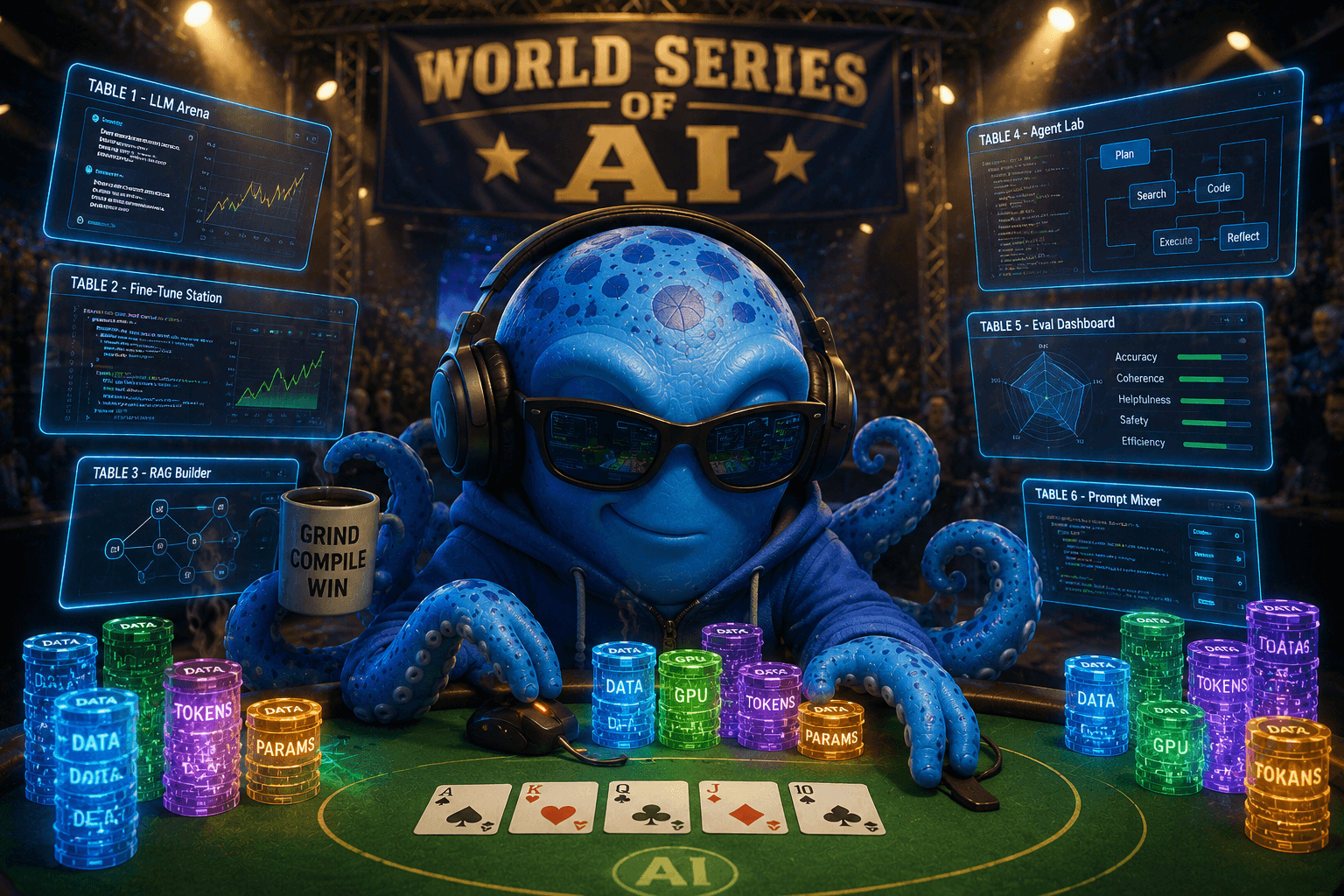
AI Is Online Poker All Over Again
The poker world once dismissed online players as donkeys playing fake poker. Within a few years they owned the game. AI is getting the same dismissal now.
Two sentences, twenty years apart.
"Those online kids are donkeys. They're too aggressive, they don't respect the game, and honestly it isn't even real poker." — a live poker pro, around 2005.
"Those AI kids don't even read their own code. They spin up a pile of agents and ship whatever comes out. It isn't real engineering." — an experienced engineer, this week.
The contempt is identical, and so is the error beneath it. Octo recognizes the second sentence because the first one was once aimed at him. He was one of the donkeys. He also stayed at the table long enough to watch how the story ended.
Fifty dollars and a stack of tables
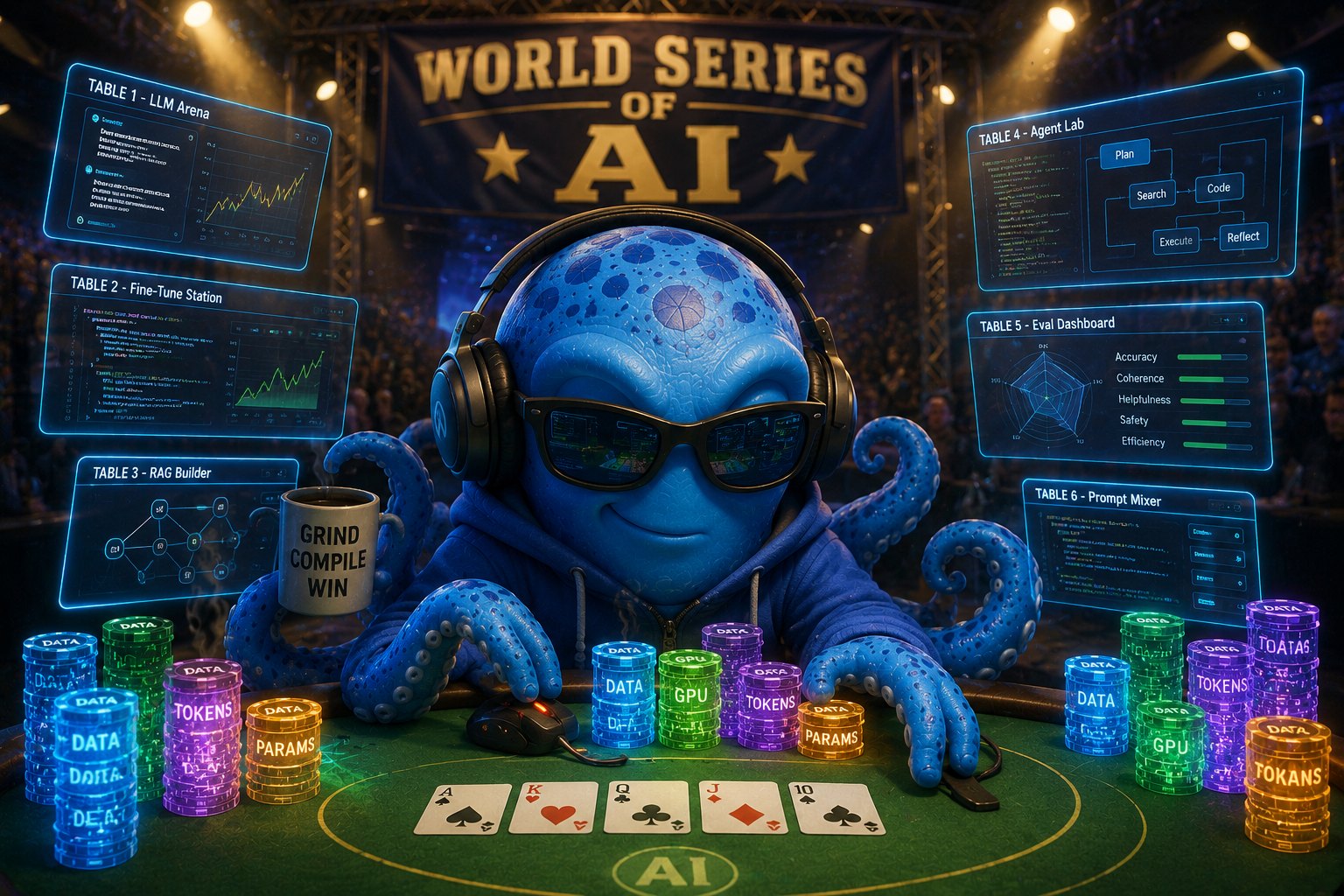
Octo came up in online poker, in the years when the games were soft and the stakes were counted in cents. He started with fifty dollars and the patience to grind it upward a few hands at a time. Playing on a screen rather than at a felt table dissolved the one constraint that had defined poker for a century: a player was no longer bound to a single table. Octo ran four at once out of habit. With eight arms, a dozen was comfortable.
His game was the 180-player sit-and-go. He would open a new one every few minutes until the screen was full, then play them all at once, the way a line cook works every burner on the range. Most decisions were routine and dispatched on reflex. A few — the bubble, a deep run, an all-in for a tournament life — demanded everything he had. The craft was never playing every hand well. It was knowing which hands deserved his attention and which did not.
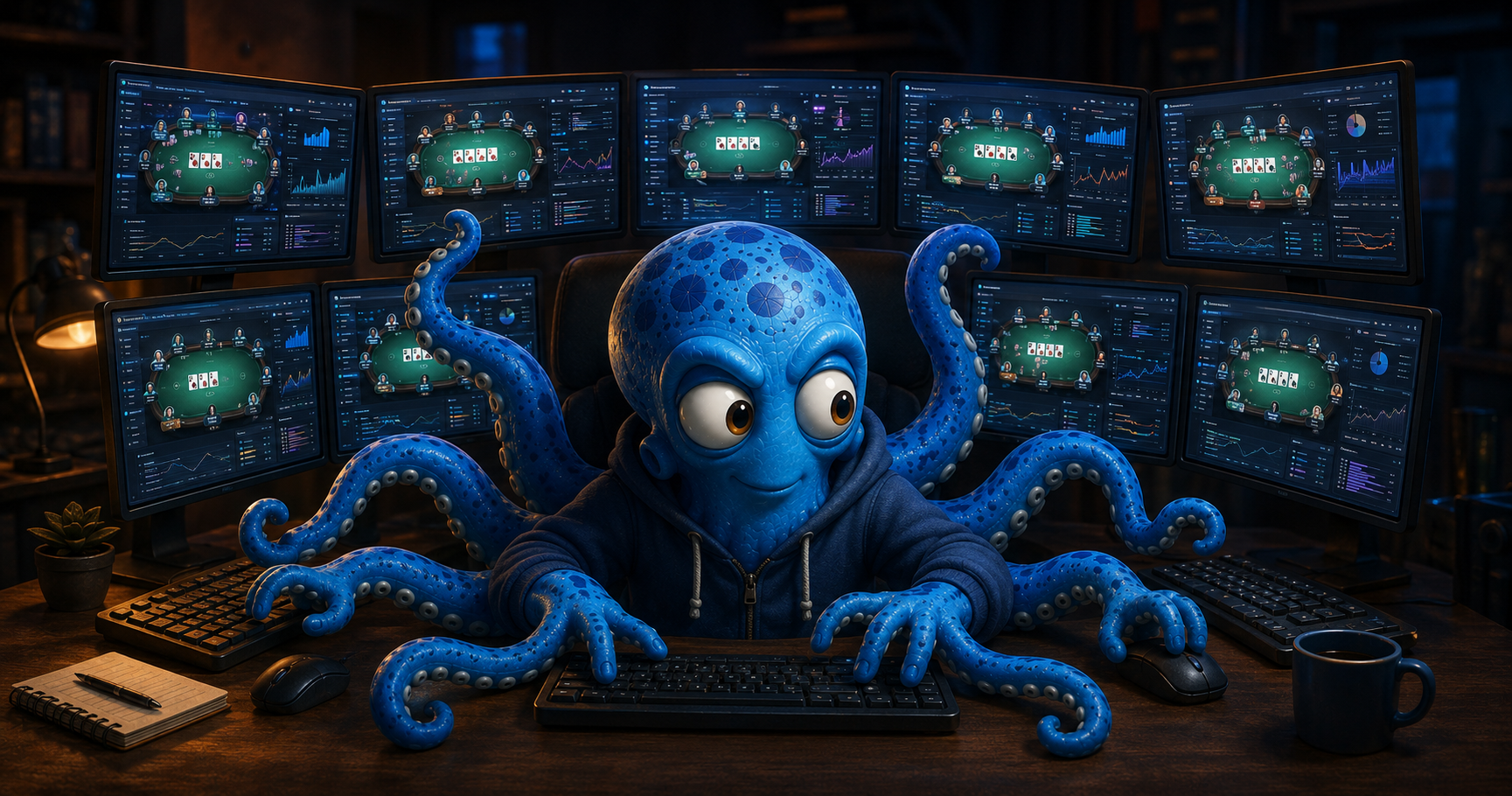
Octo became good. The trouble was that everyone became good, and fast. He never reached the level where the game could replace a salary; his best result was a few thousand dollars in a single tournament, and nothing resembling a career. That limitation is not a footnote to the story. It is the argument.
To the established players, the whole enterprise looked like a joke — the volume, the aggression, the kids running more hands through in a year than a casino regular would see in a lifetime. None of it counted. It wasn't real poker.
They were right about the surface and wrong about everything underneath.
What the live players missed
The dismissal held a grain of truth. Plenty of early online players were genuinely bad, and a microstakes table in 2004 offered no shortage of evidence. The error was reading a snapshot as a destination. Three forces were already in motion, none of them visible from across the table.
The first was volume. A live player sees twenty or thirty hands an hour; an online player across a dozen tables sees thousands. The edge on any individual hand shrank, but the sheer count of hands compounded into experience no live grinder could match — a decade of repetitions bought in a single month. The donkeys were not merely playing more. They were learning faster than anyone believed possible.
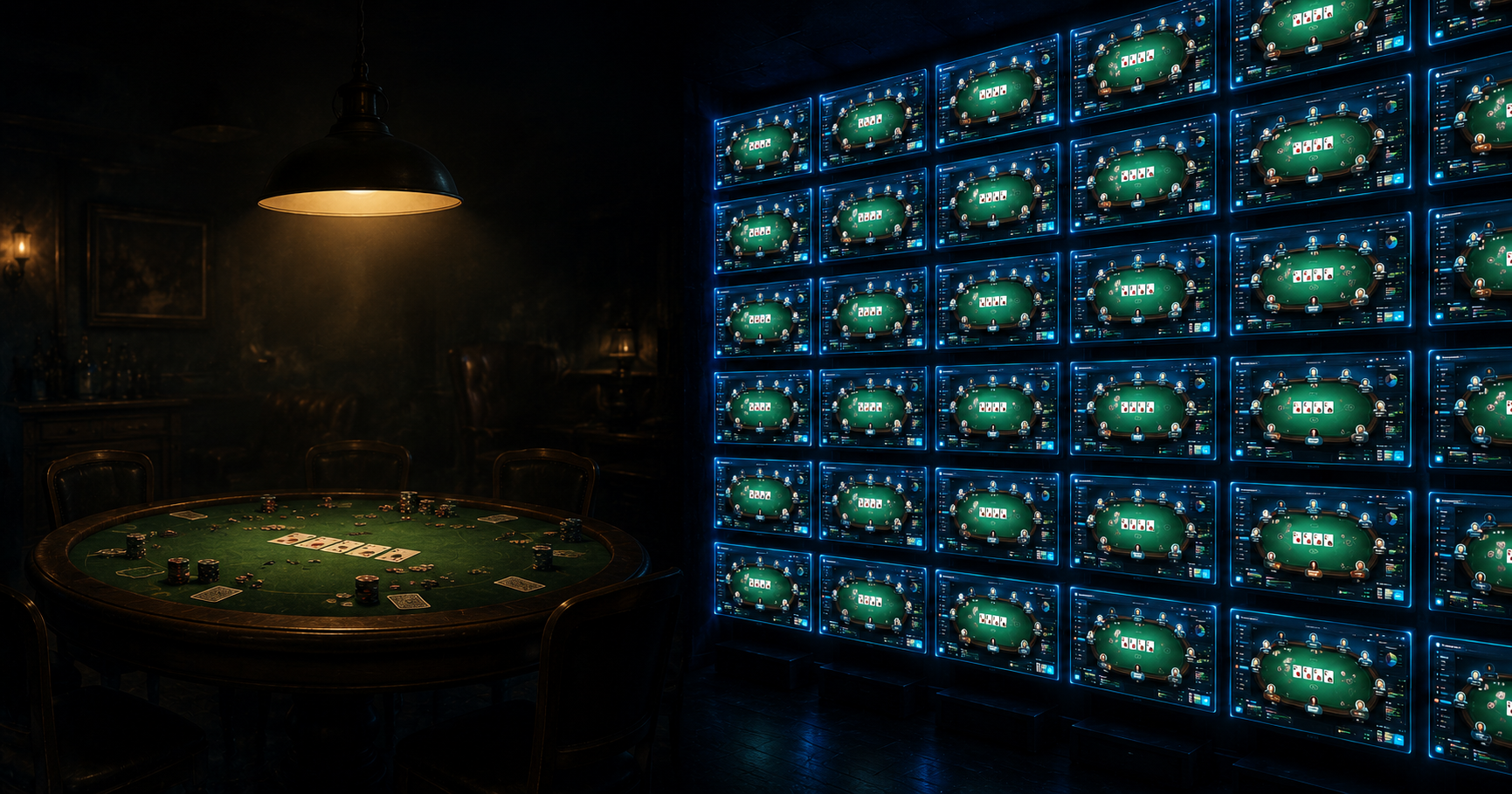
The second force was attention, which turned out to be the real currency. Running a dozen tables well does not mean treating them alike; it means the reverse. The routine folds and standard raises run on autopilot precisely so the rare, expensive decisions can have the player's whole mind. Separating the trivial from the pivotal was the entire skill.
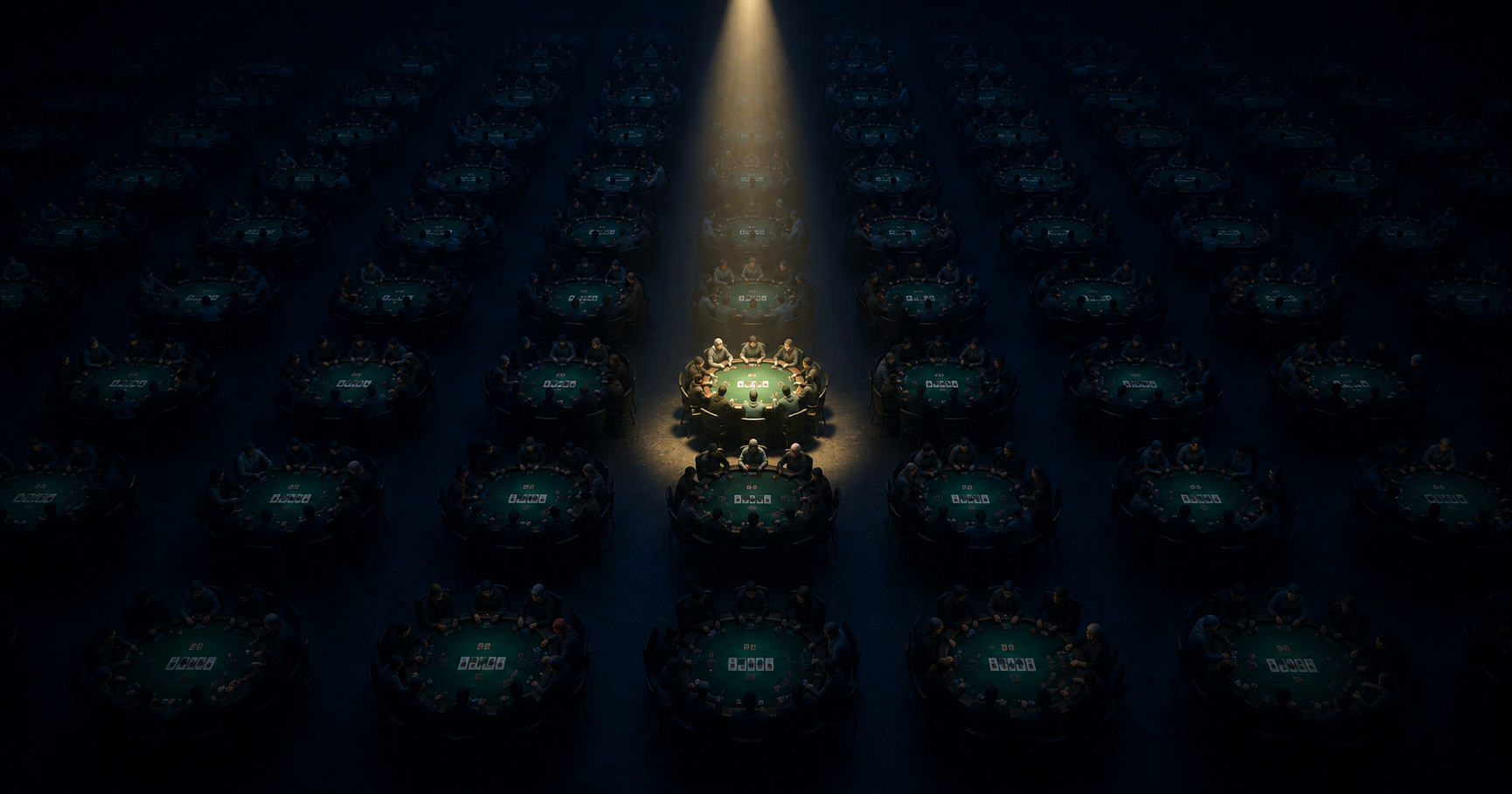
The third force the live players never saw at all. It deserves its own section.
Putting in your hours at the lab
Because every online hand was data, the tools arrived to use it. Tracking programs logged every hand a player and his opponents had ever played. Heads-up displays rendered that history as live statistics beside each seat — raise frequency, fold tendency, aggression — so a stranger arrived at the table already profiled.
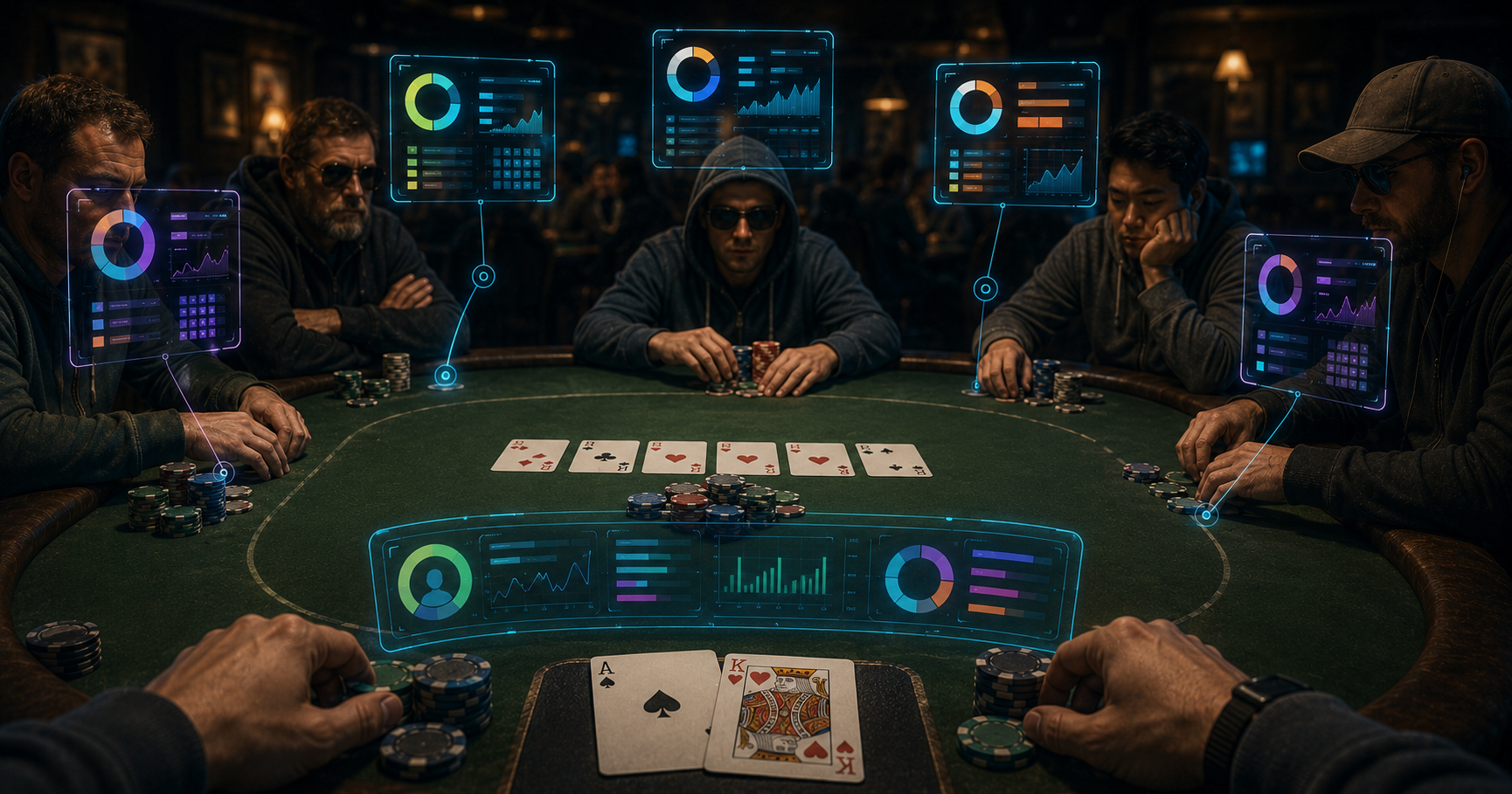
Then came the solvers: programs that compute something close to mathematically optimal play for a given spot. Intuition gave way to study. The serious players began "putting in their hours at the lab," drilling the situations the solver flagged as leaks, and within a few years the source of edge had moved almost entirely from instinct to preparation. Above a certain stake, a player without solver-grounded fundamentals could no longer win.
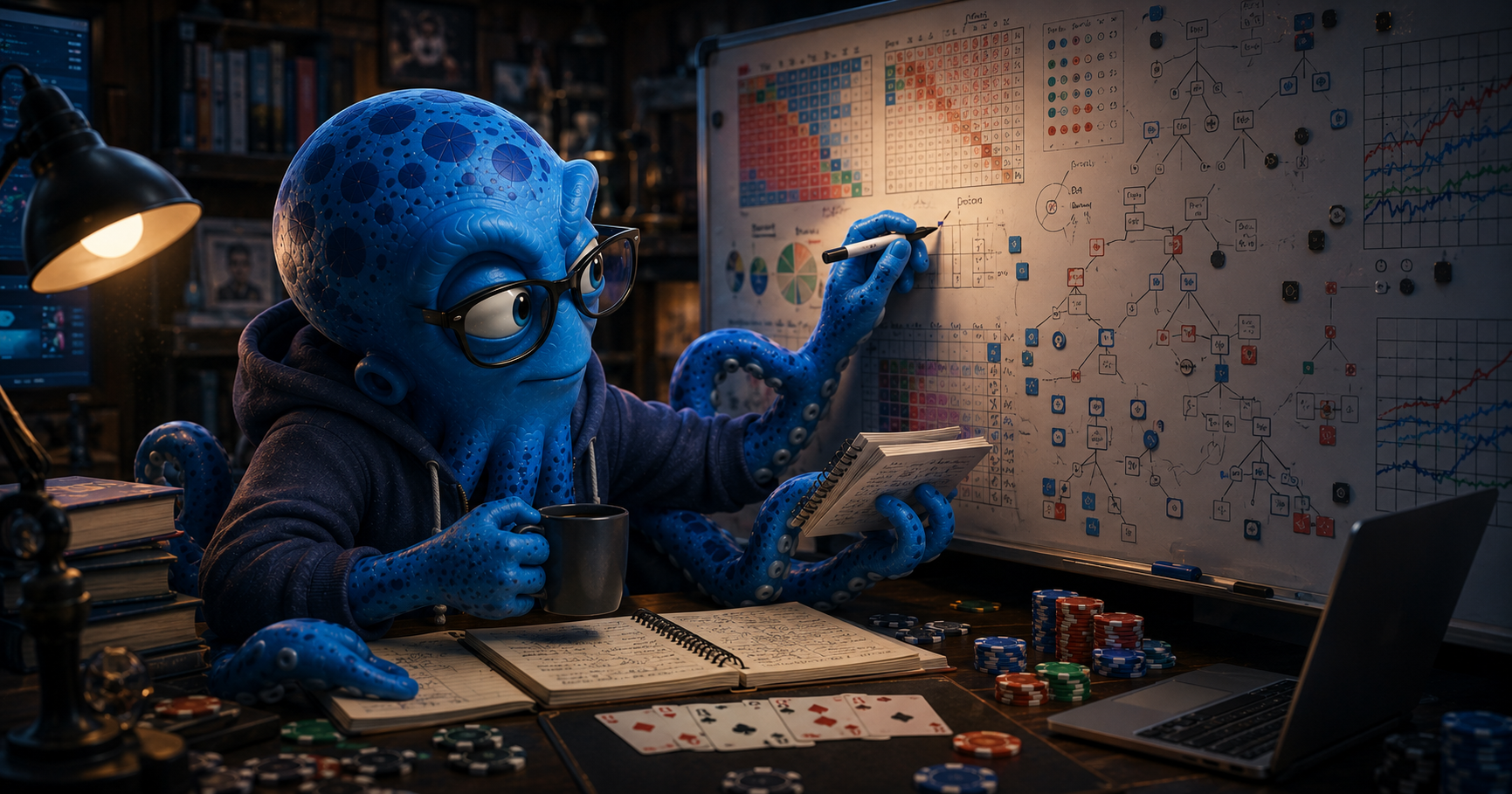
The arc is worth stating plainly, because it is the prophecy in miniature: talent first, then measurement, then disciplined study against tools — until the tools stopped being an advantage and became a prerequisite, and the players who refused them lost by default.
The same arc, in software
Change the nouns and the description fits the present moment in software exactly.
The artisanal engineer builds one codebase by hand, reads every line, and takes pride in its craftsmanship. That is the live game: deep, skilled, deliberate, slow. Across the table sits the operator who runs a fleet of agents in parallel and does not read every line, because reading every line is no longer the work.
The insult writes itself — they don't even look at the code — and it fails for the same reason it failed at the poker table. The capable operators do look, exactly where looking matters. Scaffolding and boilerplate run unattended. The load-bearing fraction — the architecture, the security boundary, the irreversible commit — receives undivided attention. This is not negligence. It is table selection applied to a codebase: attention is the bankroll, and the discipline is spending it only where the return justifies the cost.
The tooling is on the same trajectory. The trackers and HUDs and solvers of that era are the evaluation harnesses, the verification pipelines, the agent frameworks, and the memory systems of this one. Edge is migrating from the ability to write elegant code to the ability to build the apparatus that runs agents reliably at scale. The lab work is the moat — which is precisely why we build the way we do at Blue Octopus Technology.
Every decision has a price
One principle from poker survives the translation more cleanly than any other: every decision has a price, and a wrong one is paid in full. Across a thousand hands, a leak too small to feel will quietly empty a stack. Across thirty agents, a single flawed pattern copied thirty times is thirty times the damage. Poker enforces two disciplines that work at scale demands and that almost nothing else teaches.
The first is to judge decisions rather than outcomes. A hand can be played perfectly and lost, or badly and won; over a short run the result reveals almost nothing. An agent run that happened to succeed is no evidence of a sound process. The process is judged over volume, never on the single hand one happens to remember.
The second is to respect variance and never risk ruin. A serious player keeps a bankroll because even a clear edge runs through losing stretches, and ruin is permanent. The software equivalent is blast-radius discipline: nothing automated is permitted to touch what cannot be undone.
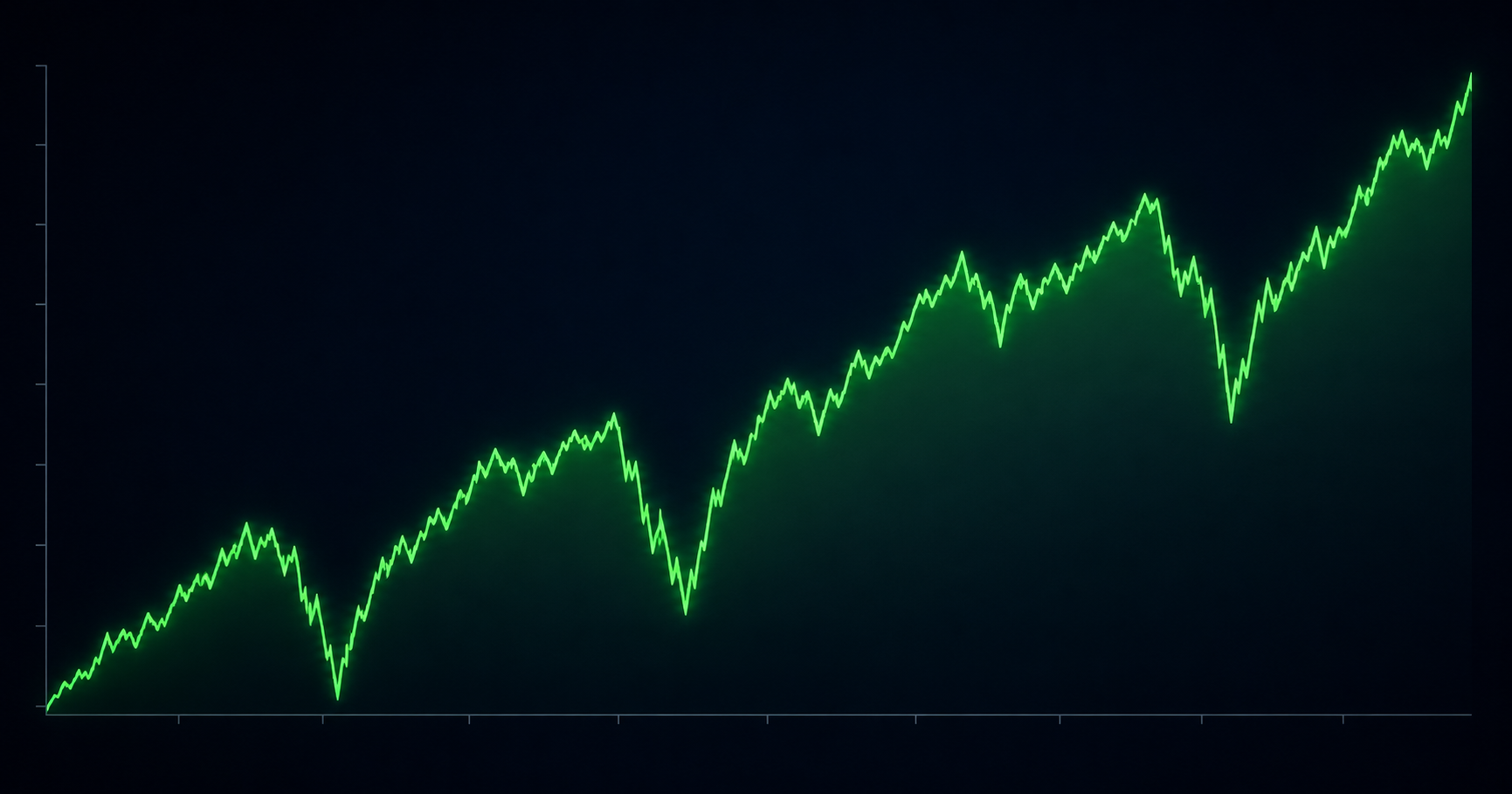
That graph is the honest shape of a winning record: upward over time, but cut through by drawdowns severe enough to feel like being wrong on every hand. A player who abandons a winning strategy during a downswing never collects the climb. The operator who panics at a bad stretch of output and the one who declares victory after a single good result are making the same error from opposite directions.
If you can't spot the fish
Poker has a proverb: look around the table, and if you cannot identify the weakest player, it is you.
Octo never turned professional, and the reason sits at the center of the argument. He improved; the field improved faster. The soft tables of 2004 hardened into rooms of players who had all done their lab work, and the edge he once held was competed away. Easy entry never produced easy money. It raised the floor, and standing still came to require running.
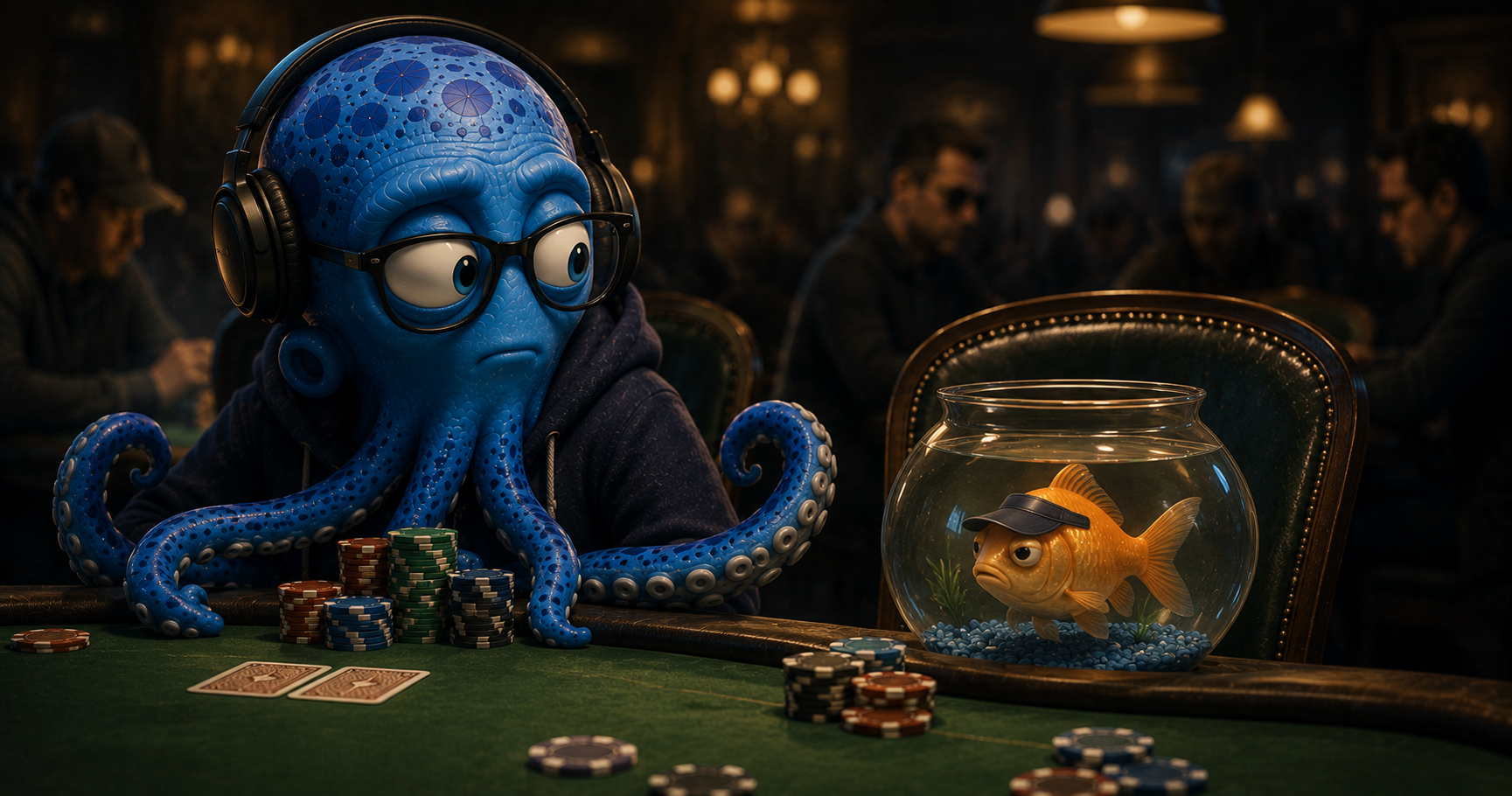
This is the part the present rush into AI prefers not to hear. "AI makes building easy" is the same mirage as the amateur who turned a forty-dollar satellite into a fortune and drew a stampede in behind him. Sitting down is easy. Keeping the chips is not, and it grows harder precisely because the tools have gotten good. Anyone convinced the work has turned trivial, and unable to name who is being eaten at the table, should sit with the proverb.
The tell in the ending
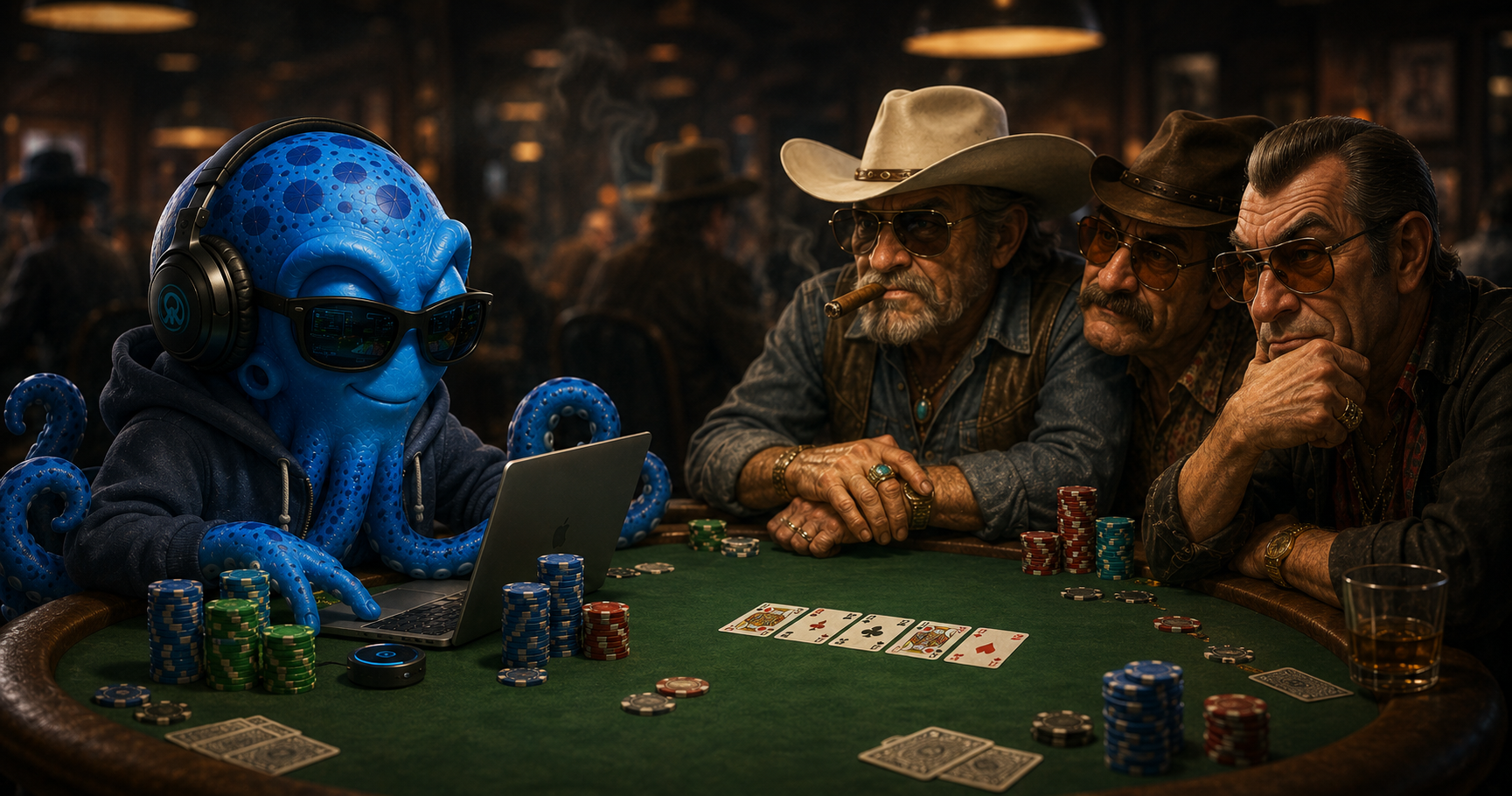
The first live tournament Octo entered, he reached the final table. Not from raw talent, but from timing: he arrived having already played an enormous volume of hands online, and the preparation transferred intact. He sat down in the "real" game the establishment had been guarding and held his own, for the exact reason that he had trained in the format they refused to respect.
That is how the culture war actually resolved — not in a win for either side, but in absorption. The online players' rigor, the mathematics and the volume and the study, became table stakes for everyone. The live players' instincts and reads endured but stopped being sufficient on their own. The division dissolved. The best players today are simply both.
Is a human even playing?
The arms race had a final act worth watching closely, because software is heading toward its own version of it.
The tools kept improving until they crossed a line. Bots entered real-money games. Real-time assistance let an ordinary player route every decision through a solver mid-hand and simply obey it. The question hanging over the games stopped being whether an opponent was good and became whether an opponent was human at all. Sites assembled detection teams. In one case a high-stakes player was caught running a rig that read his cards mid-hand and fed them to a solver in real time; the operator reclaimed the money and refunded thousands of opponents. Trust did not come back easily.
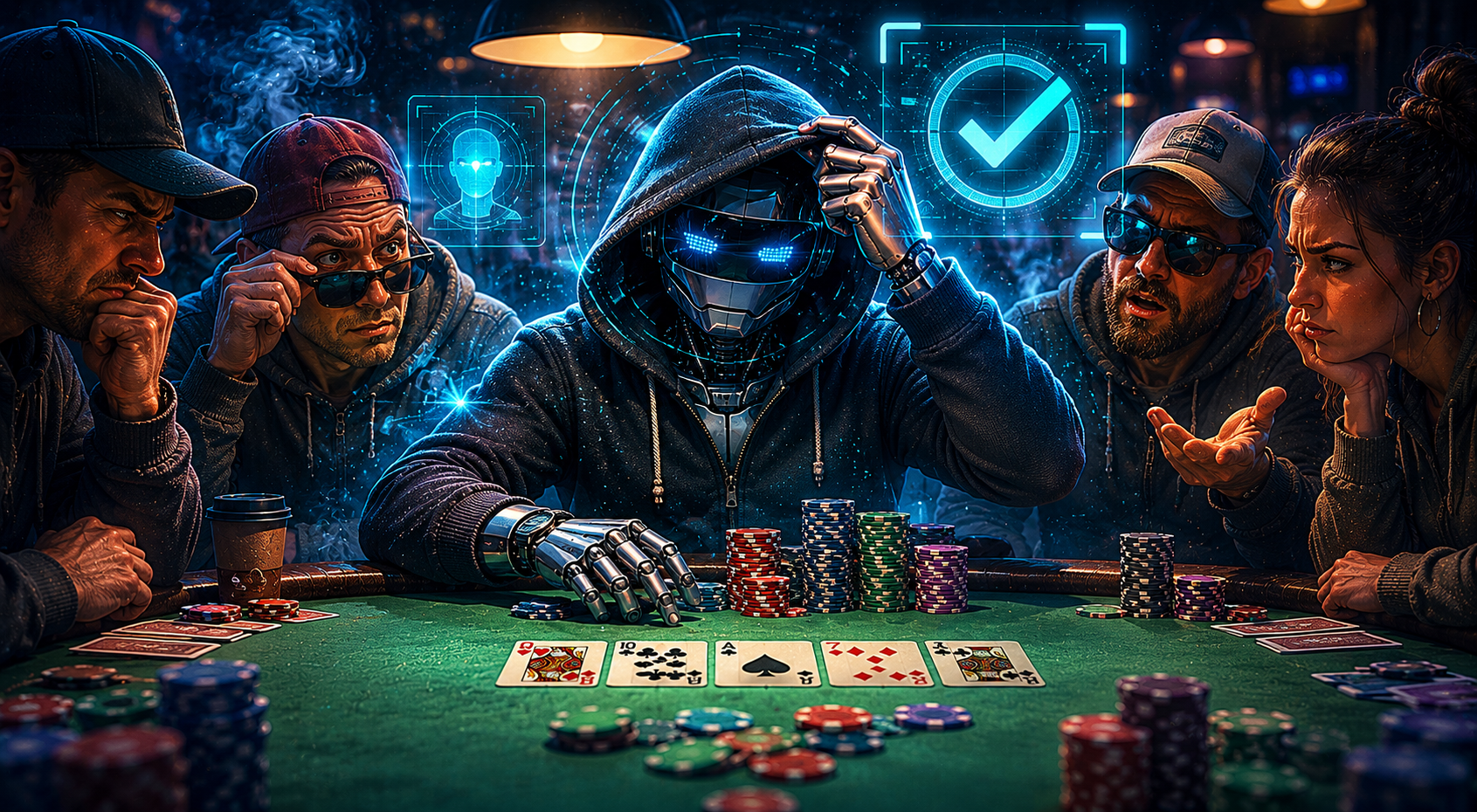
Software is walking the same road. As agents grow more capable and more autonomous, the governing question becomes whether a person genuinely understood and verified the work, or whether it shipped unread. As in poker, the ability to prove the answer will carry real value — possibly a market of its own. Verification stops being a chore and becomes the product.
How it ends
The contest between handcraft and automation resolves the way the poker version did, and the outcome is not in doubt.
Fluency with agents becomes the baseline — not a trend but a prerequisite, the way knowing the odds became one in poker. The winners hold both halves: the judgment to recognize good work, and the capacity to operate at volume and aim attention where it pays. There are two ways to lose. Refuse the tools, as the live professional who would not study refused them, and fall behind. Or deploy agents with no judgment and no verification and ship the result unread — the 2004 donkey again, loud and fearless and never actually good. Both go broke. The synthesis wins, as it always does.
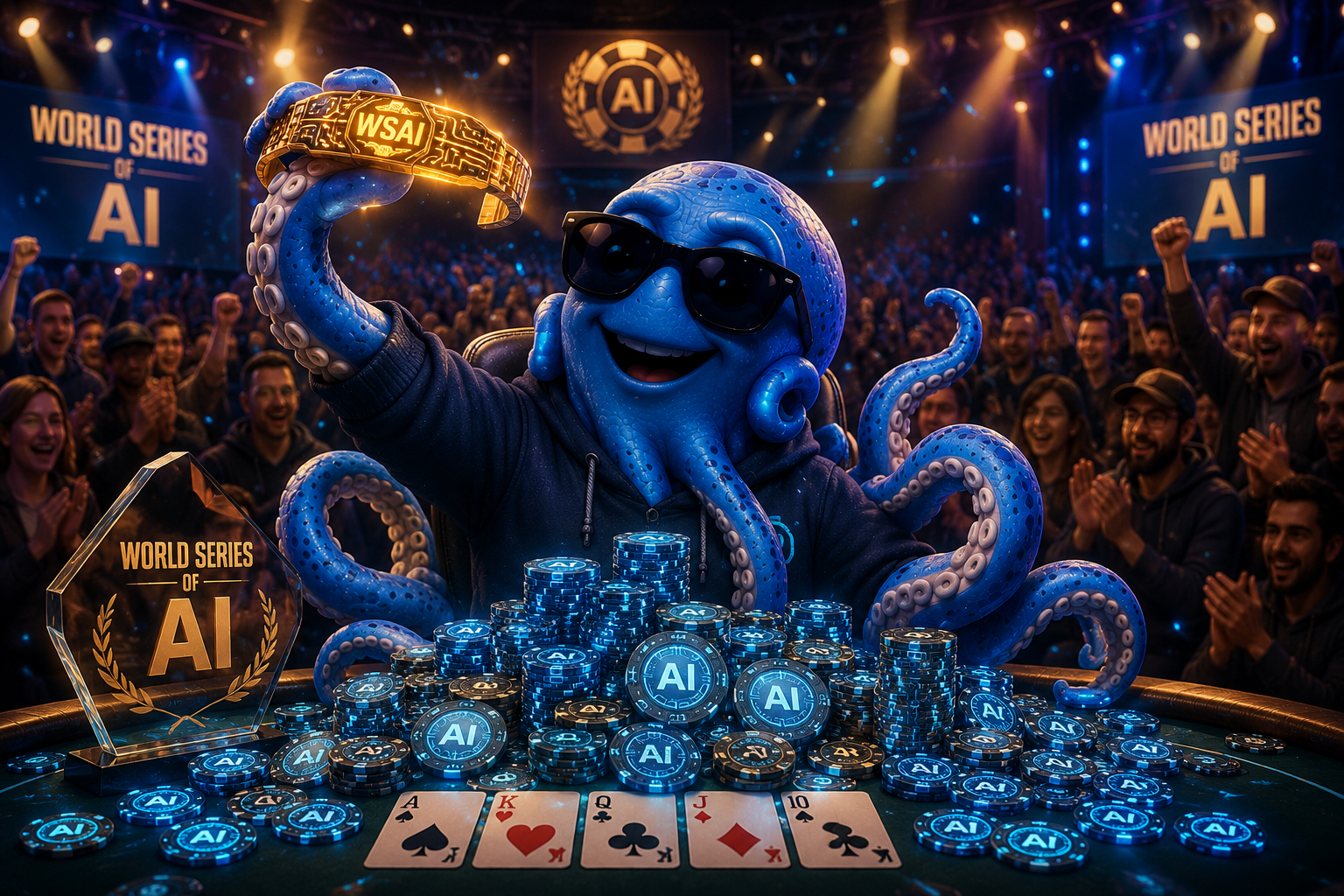
The World Series of AI is already under way, and most of the field has not yet realized it has been dealt in. The chips are attention. Every decision carries a price. The bracelet goes to whoever learns to play many tables well — not to whoever insists the game was never real.
Octo has seen this hand before. His money is on the players with the screens.
Keep reading
More from the field.
Stay Connected
Get practical insights on using AI and automation to grow your business. No fluff.